Culture & Leisure
The cultural bridge between Ireland and Canada represents one of the most vibrant and enduring connections in the diaspora experience. For millions of Canadians claiming Irish ancestry, and for those in Ireland looking across the Atlantic, culture and leisure activities provide tangible ways to engage with a shared heritage. Whether through the rhythmic precision of Irish dance, the haunting melodies of Celtic music, or the narrative threads woven through Irish-Canadian literature, these cultural expressions offer pathways to understanding, participation, and belonging.
This rich tapestry of cultural leisure pursuits encompasses both traditional practices preserved over centuries and contemporary innovations that reflect modern Irish and Canadian identities. From the competitive world of Feis dancing to the intimate craft of bodhrán playing, from curating Celtic music festivals to analyzing the literary landscapes that connect Dublin to Toronto, these activities invite participation at every level. Understanding the fundamentals of each discipline empowers newcomers to engage confidently while offering seasoned practitioners deeper insight into the interconnected nature of Irish cultural expression.
Irish Dance: Foundation, Technique, and Competition
Irish dance stands as perhaps the most visually striking element of Irish cultural leisure, combining athletic precision with artistic expression. For beginners entering this demanding art form, understanding the foundational elements proves essential to both enjoyment and progress.
Starting With Proper Footwear
The journey into Irish dance begins, quite literally, from the ground up. Soft shoes (ghillies) and hard shoes (heavy shoes) serve distinct purposes in the dancer’s repertoire. Ghillies, resembling ballet slippers with laces, allow for the graceful execution of light, quick movements in reels and slip jigs. Hard shoes, featuring fiberglass tips and heels, produce the percussive sounds essential to hornpipes and treble jigs. Beginners typically start with ghillies, as proper foot placement and posture must be established before adding the complexity of hard shoe technique.
Quality matters significantly in this investment. In Ireland, established manufacturers produce footwear that balances durability with the flexibility young feet require. Canadian dancers often source their shoes through specialized retailers in cities with strong Irish communities—Toronto, Montreal, and Vancouver maintain shops staffed by knowledgeable professionals who understand regional preferences and can ensure proper fit. A well-fitted ghillie should feel snug across the arch without constricting the toes, while hard shoes require enough room to accommodate growth in younger dancers yet remain secure during rapid footwork.
Understanding the Feis Experience
The Feis (pronounced “fesh”) represents the competitive heart of Irish dance culture, where dancers of all ages and abilities gather to perform before certified adjudicators. These competitions occur regularly throughout Ireland and across Canada, from intimate local events to major regional championships. Preparing for a Feis involves more than mastering choreography—it requires understanding competition etiquette, dress codes, and the mental preparation needed for performance.
For families new to the Feis circuit, the atmosphere can initially seem overwhelming. Dancers arrive hours before their scheduled stage time, warming up in crowded halls while parents navigate registration tables and competition schedules. Yet this environment fosters community; experienced families readily share advice about everything from hairstyling techniques to managing pre-performance nerves. In Canada particularly, Feiseanna often become weekend-long gatherings where the Irish-Canadian community reconnects, with céilí dances and informal sessions complementing the formal competitions.
Celtic Music: Instruments, Events, and Curation
Celtic music encompasses a living tradition that evolves while maintaining deep roots in Irish musical heritage. Whether participating as a musician or engaging as an informed listener and event organizer, understanding the key instruments and the contexts in which they thrive enriches the cultural leisure experience.
The Bodhrán: Mastering Ireland’s Frame Drum
The bodhrán (pronounced “bow-rawn”) serves as the rhythmic backbone of traditional Irish music sessions. This shallow frame drum, typically measuring between 14 and 18 inches in diameter, produces sounds ranging from deep, resonant tones to sharp, crisp beats depending on playing technique and construction. Mastering the bodhrán requires developing an understanding of traditional rhythm patterns, hand positioning, and the subtle art of contributing to a session without overwhelming other instruments.
The choice of skin type fundamentally shapes the instrument’s voice. Goatskin remains the traditional choice, prized for its responsiveness and warm tone, though it responds noticeably to humidity changes—a consideration for Canadian players experiencing dramatic seasonal variations. Synthetic heads offer consistency across climate conditions, making them increasingly popular for musicians who perform in varied environments. The skin’s thickness affects playability as well: thinner skins (3-4 mil) respond quickly but require delicate touch, while thicker skins (5-6 mil) tolerate more aggressive playing styles and produce deeper bass tones.
Improving rhythm complexity separates adequate bodhrán players from those who elevate a session. Traditional patterns like the Kerry style emphasize triplet-based rhythms played with the back-and-forth motion of the tipper (beater), while top-end playing incorporates rim shots and pitch bends achieved by applying hand pressure to the skin’s interior. Contemporary players study recordings of masters while seeking out experienced musicians in Irish music communities—cities like Galway, Cork, Ottawa, and St. John’s maintain vibrant session cultures where learners can observe nuanced technique in context.
Curating Celtic Music Events
Whether organizing a pub session, a concert series, or a major festival, those who curate Celtic music events shoulder the responsibility of creating spaces where tradition thrives and evolves. Curating a balanced lineup requires understanding the spectrum of Celtic musical expression, from strictly traditional purists to contemporary fusion artists incorporating elements from other genres.
Successful events typically include:
- Traditional session musicians who maintain authentic regional styles (Donegal, Sliabh Luachra, Clare)
- Contemporary interpreters who respect traditional forms while bringing fresh arrangements
- Opportunities for audience participation, particularly in workshop formats
- Representation across instrument families: strings (fiddle, harp), winds (flute, uilleann pipes, whistle), and percussion
The music playlist for Celtic events requires thoughtful construction to create emotional flow. Opening with lively jigs and reels energizes audiences, while strategically placed slow airs and songs provide moments for reflection. In Canada’s multicultural festival landscape, Celtic music often appears alongside other cultural traditions, creating opportunities for cross-cultural dialogue while maintaining the integrity of Irish musical identity.
Irish-Canadian Literary Connections: Heritage on the Page
The literary relationship between Ireland and Canada extends beyond simple immigration narratives, encompassing complex explorations of identity, memory, landscape, and belonging. Modern Irish-Canadian writers have created a distinctive body of work that speaks to both heritage and contemporary experience.
Tracing Biographical and Thematic Influences
The impact of Irish heritage on Canadian writers manifests in numerous ways, from direct engagement with family immigration histories to more subtle influences on narrative voice and thematic concerns. Writers with Irish backgrounds have contributed significantly to Canadian literature, bringing perspectives shaped by an understanding of displacement, cultural preservation, and the negotiation of multiple identities. Biographical influences often trace back several generations, with contemporary writers exploring how Irish experiences of famine, colonization, and emigration echo through family lines and inform present-day Canadian identity.
Key themes emerging in modern Irish-Canadian literature include the connection between landscape and memory. The rugged beauty of Newfoundland’s coastline evokes comparisons to Ireland’s western seaboard, while the vast Canadian prairies create contexts for examining what is lost and gained when Irish rural traditions meet New World spaces. Writers navigate these dual landscapes both literally and metaphorically, using geographical settings as frameworks for exploring questions of home, exile, and transformation.
Accessing and Analyzing Contemporary Works
For readers seeking to engage deeply with Irish-Canadian literary connections, accessing niche publications proves essential. University presses in both countries publish scholarly works examining these connections, while literary journals feature contemporary fiction and poetry exploring Irish-Canadian themes. Libraries in Canadian cities with significant Irish populations—Halifax, Montreal, Toronto, and Vancouver—maintain specialized collections, and cultural organizations often sponsor reading series featuring relevant authors.
Comparing narrative styles across the Irish-Canadian literary spectrum reveals fascinating variations. Some writers employ techniques drawn directly from Irish oral storytelling traditions, with digressive narratives and prominent storyteller voices. Others integrate Celtic mythological elements into contemporary Canadian settings, creating magical realist frameworks. Still others adopt more modernist or experimental approaches while maintaining thematic connections to Irish experience. Analyzing these stylistic choices illuminates how writers negotiate their relationship to Irish literary traditions while establishing distinctly Canadian voices.
Immersive Cultural Learning and Resource Access
Deep engagement with Irish culture and leisure pursuits thrives when learners can access immersive environments that replicate the social and cultural contexts in which these traditions naturally occur. In Ireland, this might mean attending traditional music sessions in rural pubs, visiting Irish-language Gaeltacht regions, or participating in community-based cultural programs. For Canadians, Irish cultural centers in major cities offer language classes, dance instruction, and music sessions that create pockets of immersion without requiring transatlantic travel.
The challenge of accessing restricted or specialized resources affects serious students of Irish culture. Academic databases containing scholarly research on Irish literature and music often require institutional access, while certain archival materials—historical recordings, manuscript collections, and specialized publications—may have limited availability. Heritage organizations in both Ireland and Canada increasingly digitize collections, improving access, yet navigating these resources requires knowledge of what exists and where to find it. Networking within cultural communities, whether through dance schools, music sessions, or literary societies, often provides the informal knowledge-sharing that opens doors to these valuable resources.
The interconnected nature of Irish cultural leisure pursuits means that engagement with one element often leads naturally to others. A dancer discovers traditional music through Feis accompaniment and begins learning bodhrán. A literature enthusiast attends a reading and discovers the poet also performs traditional songs. A bodhrán player curious about the drum’s cultural context begins reading Irish history and literature. This web of connections reflects the holistic nature of cultural identity itself, where artistic expression, community participation, and personal exploration interweave to create meaningful engagement with Irish heritage across the Atlantic.
How Did Irish Heritage Influence the Gothic Style of Southern Ontario Writers?
Contrary to popular belief, Southern Ontario Gothic isn’t just about ghost stories. It’s the literary echo of a specific trauma: the anxiety of Irish famine settlers, transposed onto a new, unforgiving landscape. This article unpacks how this inherited sense of…
Read more
How Does Contemporary Irish Literature Address the Modern Trauma of Displacement?
Contemporary Irish literature reframes displacement not as a historical memory, but as an ongoing economic and psychological crisis mirrored in Canadian society. Motifs like “ghost estates” resonate directly with Canada’s urban housing shortages, revealing a shared anxiety of economic non-belonging….
Read more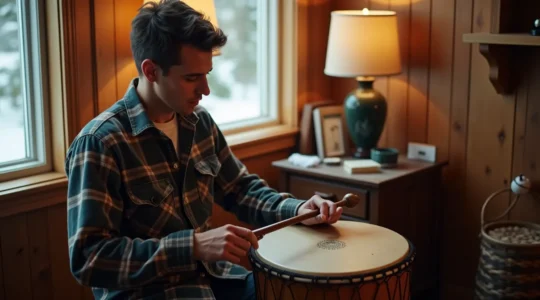
A Luthier’s Guide to Buying a Bodhrán in Canada: Beyond the Souvenir Shop
A quality bodhrán is not a decorative souvenir; it’s a dynamic acoustic engine engineered to perform. Tunability is non-negotiable to combat Canada’s extreme humidity shifts which can damage or detune an instrument overnight. The choice between goatskin and synthetic heads…
Read more
How to Organize a Profitable Celtic Music Festival in a Small Canadian Town?
Most small-town festivals fail because they operate like one-off parties instead of sustainable cultural businesses. Financial stability relies on a hybrid programming model to maximize audience reach and diversify revenue far beyond ticket sales. Authenticity is a tangible asset; leveraging…
Read more