Education & Learning
Education represents far more than the simple transfer of information from teacher to student. Within Irish and Canadian communities, learning serves as a bridge between generations, a keeper of cultural memory, and a pathway toward understanding both where we come from and where we’re heading. Whether you’re attempting to trace your ancestors’ journey across the Atlantic, reviving a language that once seemed lost, or navigating the complexities of modern online credentials, the educational journey you undertake shapes not only your knowledge base but your very identity.
The landscape of learning has transformed dramatically in recent decades, yet certain fundamental questions remain constant: How do we preserve what matters while embracing innovation? What methods truly work for different types of knowledge? How do we validate the quality of what we’re learning? This comprehensive exploration addresses these questions by examining the diverse educational pathways available to learners in Irish and Canadian contexts, from cultural heritage preservation to cutting-edge digital learning environments.
Preserving Cultural Identity Through Educational Practices
For diaspora communities, education becomes an act of cultural resistance and celebration. The revival of Irish language skills in Canadian contexts presents unique challenges that differ markedly from learning in Ireland itself. Without daily environmental exposure to native speakers, Canadian learners must create artificial immersion through dedicated language circles, online conversation partners, and media consumption.
Traditional Irish dance schools across Canadian cities—from Vancouver to Halifax—serve dual purposes: they teach precise footwork and timing while transmitting stories, music, and social traditions that might otherwise fade within a generation. When teaching these dances to beginners, instructors don’t simply demonstrate steps; they explain the historical contexts of each dance form, connecting movements to celebrations, protests, and community gatherings that shaped Irish identity.
Understanding the historical context of emigration enriches this cultural education immeasurably. When learners grasp why their ancestors left Ireland—whether fleeing famine, seeking economic opportunity, or escaping political persecution—the language lessons and dance steps acquire profound personal meaning. This contextual knowledge transforms rote learning into something far more powerful: an educational journey that honors lived experience.
Tracing Family Stories Through Research Skills
Genealogical research represents one of the most personally motivated forms of education available. The process of locating specific ship manifests and passenger lists requires developing multiple competencies simultaneously: archival research methods, historical knowledge, paleography skills for reading old handwriting, and increasingly, digital literacy for navigating online databases.
Many Canadian researchers seeking Irish ancestry face particular challenges. Immigration records may exist in Dublin, in Canadian provincial archives, or in specialized collections held by organizations like Library and Archives Canada or the Irish Family History Foundation. Accessing remote archives often involves understanding different cataloguing systems, privacy regulations that vary between jurisdictions, and the practical skills of requesting digital copies or traveling to physical locations.
The educational value extends beyond simply finding names and dates. Learning to use primary sources critically—questioning their biases, understanding what they omit, and cross-referencing multiple documents—develops analytical thinking applicable across many fields. When you discover an ancestor who moved from urban Dublin slums to rural Ontario farms, you’re not just collecting data; you’re developing historical empathy and research methodology that educational institutions highly value.
Evaluating Source Authenticity
In an era where information floods toward us constantly, verifying source quality has become an essential educational competency. Genealogical researchers quickly learn to distinguish between primary sources (original ship manifests, birth certificates) and secondary interpretations. This same critical framework applies when evaluating online courses, news articles, or scientific claims—making source verification a transferable skill with applications far beyond family history.
Mastering New Skills: Effective Learning Strategies
Language acquisition provides perhaps the clearest window into how learning actually works. English speakers attempting Irish face a moderate difficulty curve—the language’s grammatical structures differ significantly from English, particularly in how it handles verb tenses and initial consonant mutations, yet it uses the familiar Latin alphabet and shares some vocabulary through historical contact.
Successful language learners understand that sequencing matters enormously. Attempting complex grammatical structures before mastering basic conversational patterns typically leads to frustration and abandonment. The most effective approach usually involves:
- Building a foundation of high-frequency phrases used in daily contexts
- Developing listening comprehension before focusing heavily on perfect pronunciation
- Creating opportunities for practical use, even if initially uncomfortable
- Accepting that language barriers will persist through intermediate stages
These principles transfer remarkably well to other skill acquisition contexts. Learning the basic strokes in traditional Irish sports like hurling, or mastering the rhythm and timing essential to set dancing, follows similar developmental patterns. Each domain requires breaking complex performances into manageable components, practicing fundamentals until they become automatic, then gradually increasing complexity and speed.
Selecting Appropriate Learning Methods
Not every method suits every learner or every subject. Visual learners might thrive with video demonstrations of dance steps but struggle with audio-only language lessons. Understanding your own learning preferences—while remaining open to methods that initially feel uncomfortable—accelerates progress across all educational endeavors. Many Canadian community colleges and Irish cultural organizations now offer diagnostic tools to help learners identify their most effective approaches.
Scientific Literacy and Environmental Education
Education extends far beyond classroom walls into the natural environments surrounding us. The practice of observing wildlife responsibly and scientifically develops multiple competencies: patience, attention to detail, ethical consideration of our impact on ecosystems, and data recording skills. Both Irish coastlines and Canadian wilderness areas offer extraordinary opportunities for this form of education.
Understanding migration patterns—whether of Arctic terns traveling between Irish wetlands and Antarctic waters, or caribou movements across northern Canada—requires grasping complex concepts: seasonal triggers, navigation mechanisms, climate influences, and ecological interdependencies. These topics naturally lead learners toward broader scientific literacy in biology, geography, and increasingly, climate science.
Contributing to citizen science projects transforms passive observation into active research participation. Programs like the Irish Wildlife Trust’s recording schemes or Birds Canada’s monitoring initiatives welcome contributions from trained amateurs. This democratization of scientific research provides educational value that traditional classroom settings struggle to match: real-world application, immediate relevance, and direct contribution to collective knowledge.
Developing Field Research Competencies
Reading topographic maps, understanding wave dynamics for coastal safety, and using field guides for species identification represent practical skills with immediate applications. Whether you’re hiking the Wicklow Mountains or exploring Cape Breton’s coastal trails, these competencies enhance both safety and appreciation. Educational institutions increasingly recognize that outdoor environmental education develops problem-solving abilities and observational rigor that benefit learners across all academic disciplines.
Navigating Modern Learning Environments
The expansion of online education options has democratized access while simultaneously creating new challenges. Canadian learners can now access specialized courses from Irish universities, and vice versa, without relocating. However, this abundance requires developing new competencies: evaluating accreditation standards, managing self-motivation without physical classroom structures, and networking virtually to build peer support.
Accreditation varies significantly between jurisdictions. A credential recognized by Irish professional bodies may not transfer automatically to Canadian equivalents, and vice versa. Learners must research whether their online program meets standards recognized by relevant professional organizations—whether that’s Engineers Ireland, the Canadian Nurses Association, or provincial teaching regulatory bodies.
Self-motivation presents perhaps the greatest challenge in online learning environments. Without scheduled class times and physical presence requirements, many learners struggle to maintain momentum. Successful online students typically create artificial structure: dedicated study spaces, regular schedules, and accountability partnerships with fellow learners. The flexibility that makes online education accessible can paradoxically become the barrier that prevents completion.
Building Virtual Learning Communities
Networking while learning serves multiple purposes: it provides emotional support during difficult material, creates accountability structures, and builds professional connections valuable for future opportunities. Virtual networking requires intentionality—reaching out to discussion forum participants, joining video study sessions, and maintaining connections beyond course completion. These relationship-building skills prove valuable far beyond any individual educational program.
Innovative Approaches to Complex Subjects
Educational innovation increasingly focuses on making challenging concepts accessible through creative methods. Gamifying complex concepts—whether mathematical principles, historical events, or language vocabulary—leverages our natural enjoyment of play and competition to maintain engagement through difficult material. Irish and Canadian educational technology companies have developed platforms that turn everything from chemical equations to historical timelines into interactive challenges.
Integrating art and design into STEM education creates connections that purely technical approaches miss. When students design visually appealing data visualizations of emigration patterns, they simultaneously develop statistical reasoning, historical knowledge, and design thinking. This interdisciplinary approach mirrors how knowledge actually works outside artificial academic divisions.
Encouraging science and tech education particularly for populations historically excluded from these fields requires deliberate effort. Programs specifically designed for girls, Indigenous students, or learners from economically disadvantaged backgrounds help counterbalance systemic barriers. Both Irish and Canadian governments have recognized this need, supporting initiatives that provide not just access but genuine belonging in technical educational spaces.
Preparing for Advanced Academic Pathways
Choosing extracurricular activities strategically enhances university applications while developing genuine competencies. Admissions committees at institutions like University of Toronto or Trinity College Dublin increasingly value demonstrated commitment, leadership development, and authentic interest over superficial resume padding. Whether that involvement centers on traditional Irish music ensembles, coding clubs, or environmental activism matters less than the depth of engagement and learning demonstrated.
Accessing free and open education resources has become crucial for learners seeking to explore subjects before committing to formal programs, supplement existing coursework, or pursue knowledge for its own sake. Platforms offering openly licensed materials allow Canadian students to preview Irish university content and vice versa, making educational opportunities more transparent and accessible than ever before.
The educational journey—whether focused on cultural preservation, academic credentials, practical skills, or personal enrichment—ultimately represents an investment in your capacity to understand and engage with the world. By approaching learning strategically, selecting methods aligned with your goals and preferences, and remaining open to both traditional wisdom and innovative approaches, you position yourself not just to acquire information but to develop the adaptive thinking that serves you across a lifetime.

How to Build an Ivy-League Education Using Only Free Open Courseware?
Building a world-class education for free is not about collecting courses; it’s a radical act of strategic intellectual arbitrage. Legally leverage Creative Commons licenses to curate high-level learning materials for your specific goals. Prove your expertise through a “proof-of-work” portfolio…
Read more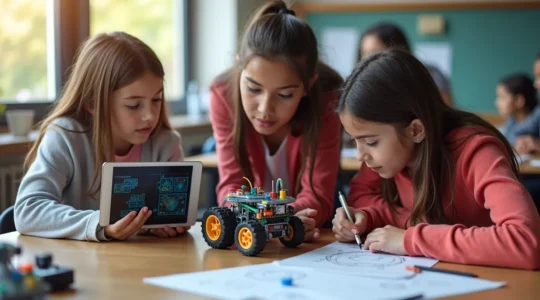
How to Keep Girls Interested in STEM During the Critical Middle School Years?
The common advice to simply “find role models” or “make STEM fun” is failing because it treats symptoms, not the cause. Keeping girls engaged requires building a complete supportive ecosystem—connecting creative arts, collaborative projects, and real-world problem-solving. Success depends on…
Read more
Athabasca vs. Open University: Which Distance Degree Is More Respected by Employers?
The most respected online degree is not about the university’s brand, but its strategic alignment with your specific career goals in either Canada or Ireland. Athabasca University’s status as a Canadian Designated Learning Institution (DLI) offers a direct advantage for…
Read more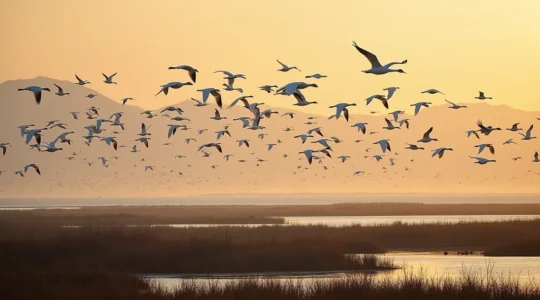
How to Identify Migratory Geese Species in the St. Lawrence Corridor?
True goose identification in the St. Lawrence goes beyond species—it’s about understanding the ecosystem, using gear effectively, and observing ethically. Success depends on recognizing specific behaviors linked to key habitats like the tidal mudflats of Cap Tourmente. Choosing the right…
Read more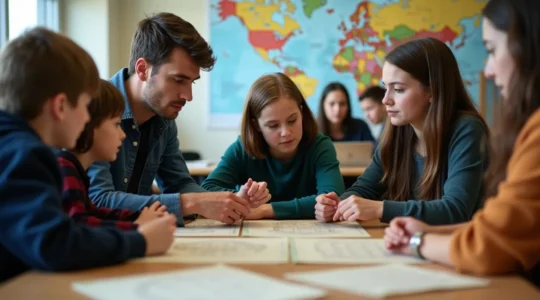
Beyond the Famine: A Guide to Teaching the History of Irish Emigration to Canada
The key to teaching Irish emigration effectively is to move beyond the Famine-centric narrative and frame it as a powerful case study in systemic policy failure, cultural resilience, and the construction of historical stereotypes. Utilize primary sources like passenger lists…
Read more
Learning Irish in Canada: A Guide to Online Resources and Local Gaeltacht Groups
Learning Irish in Canada is less about mastering a foreign language and more about an act of cultural archaeology to reconnect with your heritage. Success depends on building a personal “linguistic mosaic” of digital tools, local community events, and daily…
Read more