Most small-town festivals fail because they operate like one-off parties instead of sustainable cultural businesses.
- Financial stability relies on a hybrid programming model to maximize audience reach and diversify revenue far beyond ticket sales.
- Authenticity is a tangible asset; leveraging deep cultural ties and strategic partnerships is key to unlocking grants and building a loyal audience.
Recommendation: Treat every element, from sound engineering to cultural partnerships, as a potential asset to be leveraged for long-term profitability.
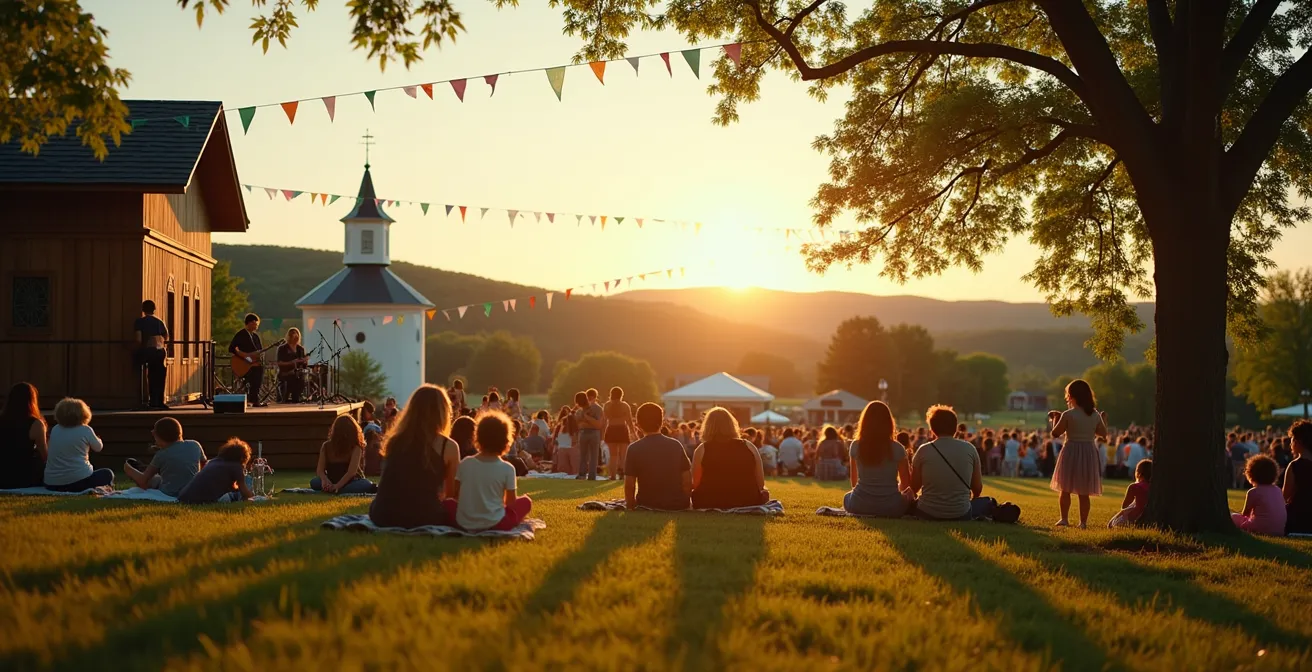
The dream is a familiar one for many community groups across Canada: a sun-drenched field, the lively sound of fiddles and bodhráns, and a community brought together by a shared love for Celtic heritage. But behind this idyllic vision lies a harsh reality. Organizing a cultural festival, especially in a small town, is a high-stakes venture where passion often collides with the unforgiving logic of spreadsheets and cash flow. The common advice—book great bands, sell tickets, find sponsors—barely scratches the surface of what it takes to survive, let alone thrive.
Many organizers focus entirely on the artistic lineup, believing that great music alone will guarantee success. They pour their limited budgets into securing performers, only to be blindsided by the crushing weight of operational costs, insurance, and marketing. What if the secret to a profitable Celtic festival wasn’t just about who is on stage, but about how you run the entire operation? The key isn’t just to put on a show, but to build a sustainable cultural enterprise.
This pragmatic guide shifts the focus from simply hosting an event to building a resilient business model. We’ll deconstruct the common points of failure and provide a strategic framework that covers everything from lineup strategy and audio engineering to grant applications and revenue diversification. It’s time to move your festival from a risky passion project to a profitable cornerstone of your community’s cultural life.
To help you navigate this complex process, we’ve structured this guide to address the most pressing challenges and opportunities you’ll face. Here is a look at the key areas we will cover.
Summary: How to Organize a Profitable Celtic Music Festival in a Small Canadian Town?
- Why Do 40% of Folk Festivals Fail in Their First 3 Years?
- Traditional vs. Celtic Rock: Which Lineup Strategy Sells More Tickets?
- How to Mix Live Bodhrán and Fiddle Audio for Outdoor Venues?
- Heritage Grants: The Application Mistake That Disqualifies 30% of Cultural Projects
- When to Launch Your Ticket Sales: The Ideal Timeline for Summer Folk Festivals
- Galway Oyster Festival vs. Taste of Dublin: Which Offers Better Value for Money?
- Off the Map: How to Find Secret Beaches Not Listed in Tourist Guides?
- How to Plan a Culinary Heritage Trip to Ireland from Canada?
Why Do 40% of Folk Festivals Fail in Their First 3 Years?
The folk festival landscape in Canada is littered with cautionary tales. The core reason many fail is a fundamental mismatch between artistic ambition and financial reality. They operate on a model of hope, assuming ticket sales will cover rapidly escalating costs. But hope is not a business strategy. The recent closure of the Regina Folk Music Festival after 55 years serves as a stark warning to all organizers.
Case Study: The Closure of the Regina Folk Music Festival
After 55 years of operation, the Regina Folk Music Festival ceased operations, while the Vancouver Island MusicFest also ended its 30-season run. A report on their struggles highlighted the perfect storm facing non-profit festivals: rising fees for performers, a punishing U.S. exchange rate, reduced consumer spending, and higher insurance charges. In contrast, survivors like the Winnipeg Folk Festival shifted their focus to being a “discovery festival,” avoiding the costly bidding wars for major headliners. This demonstrates a crucial strategic pivot: sustainability over spectacle.
Avoiding this fate requires a shift in mindset from “event planner” to “cultural entrepreneur.” It means building a resilient governance structure from day one. This involves meticulous financial planning that accounts for contingencies, diversifying revenue streams beyond the gate, and fostering deep, mutually beneficial relationships with local authorities and businesses. Financial vulnerability is often a symptom of poor foundational planning.
A sustainable festival is built on a bedrock of smart governance. Before you book a single band, you must establish clear processes for financial oversight, community partnership, and volunteer management. These aren’t bureaucratic hurdles; they are the very things that will keep your festival alive when faced with the inevitable challenges of the Canadian market.
Traditional vs. Celtic Rock: Which Lineup Strategy Sells More Tickets?
The question of lineup is central to any music festival, but it’s a strategic decision, not just an artistic one. A purely traditional lineup might delight purists but risks alienating younger audiences and families. Conversely, focusing solely on high-energy Celtic rock could feel inauthentic and lose the core cultural connection. The most successful and resilient festivals in Canada have found that the answer isn’t “either/or,” but “both/and.” A hybrid programming strategy is the key to maximizing your audience and, therefore, your ticket revenue.
This approach involves creating distinct experiences within the same event. You might have a “Trad Tent” for intimate, acoustic sessions and a main stage for more contemporary, high-energy acts. This allows you to market the festival to different demographics simultaneously. A family might come for the lively main stage but discover the beauty of traditional music, while a trad enthusiast might bring their rock-loving kids. This cross-pollination builds a broader, more loyal audience over time.
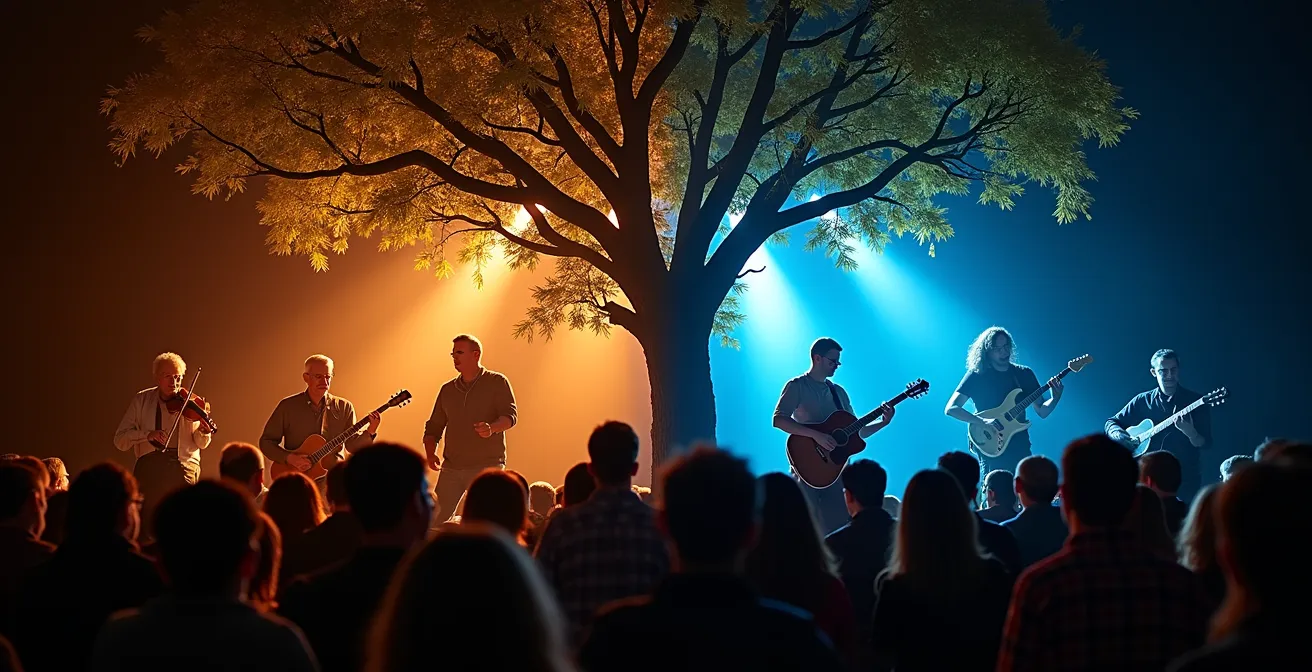
The Calgary Folk Music Festival is a prime example of this model’s success. By programming a wide array of genres under the “folk” umbrella, they have built one of Canada’s most enduring cultural events. Their model proves that audiences are open to diversity.
Case Study: The Calgary Folk Music Festival’s Genre-Bending Model
The Calgary Folk Music Festival explicitly describes itself as having “broad, cutting-edge programming” featuring everything from folk to funk and global sounds. This philosophy of showcasing over 70 artists on multiple stages in both traditional concerts and unique collaborative sessions has sustained the festival since 1980. Their success is a testament to the power of a diverse lineup in maintaining long-term audience engagement and relevance.
By blending traditional and contemporary, you aren’t diluting the experience; you are enriching it and making a savvy business decision that ensures wider appeal and greater financial resilience.
How to Mix Live Bodhrán and Fiddle Audio for Outdoor Venues?
Operational excellence is where the strategic vision of your festival meets the physical reality on the ground. Nowhere is this more apparent than in live sound. A fantastic lineup can be completely undermined by poor audio quality. For a Celtic festival, the delicate interplay between a percussive instrument like the bodhrán and a melodic one like the fiddle is a signature sound. Mixing this effectively in an unpredictable Canadian outdoor environment is a technical challenge that directly impacts attendee experience and, by extension, your festival’s reputation.
The key is to control as many variables as possible. Wind is a major enemy for sensitive condenser microphones. Therefore, robust dynamic mics like the Shure SM57 are a more reliable choice for instruments in outdoor settings. The low-frequency boom of a bodhrán can easily muddy the mix and overwhelm the brighter tones of the fiddle. This requires careful microphone placement and targeted EQ adjustments, often involving a “notch filter” to cut the specific booming frequency (usually around 200-250 Hz) without affecting the rest of the sound.
Here are some professional tips for achieving a clean mix outdoors:
- Use Shure SM57 dynamic mics for their superior wind noise rejection in Canadian outdoor conditions.
- Place the fiddle microphone about 6-8 inches from the instrument’s f-hole at a 45-degree angle to capture a balanced tone and minimize feedback.
- To prevent the sound of the bodhrán “bleeding” into the fiddle’s microphone, use a physical sound baffle (a “gobo”) between the musicians.
- Consider a dual-mic setup for the bodhrán: one capturing the percussive “slap” on the skin, and another aimed at the shell to capture its resonant tone.
- If you’re not a sound engineer, partner with a local community theatre technician. They often have invaluable experience mixing acoustic instruments on a budget.
Choosing the right equipment is a critical investment. While premium microphones offer superior sound, pragmatic choices often provide the best value and reliability for the challenging conditions of a small outdoor festival. A careful review of microphone specifications against your specific needs is essential.
| Microphone Type | Wind Resistance | Feedback Control | Price Range | Best For |
|---|---|---|---|---|
| Shure SM57 | Excellent | Very Good | $100-150 | Fiddle, general use |
| AKG C451 | Poor | Moderate | $400-500 | Indoor/sheltered only |
| Sennheiser e904 | Good | Excellent | $200-250 | Bodhrán specific |
| DPA 4099 | Moderate | Good | $500-600 | Premium fiddle sound |
Heritage Grants: The Application Mistake That Disqualifies 30% of Cultural Projects
For most small festivals, ticket sales alone will not lead to profitability. A robust and diversified funding strategy is essential, and heritage grants are the cornerstone of this strategy. The good news is that funding is available; this is especially true after the federal government boosted the Canada Music Fund with a $32 million annual increase for two years starting in 2024. The bad news is that a significant portion of applications are disqualified before they are even seriously considered. The single biggest mistake is framing the application around artistic merit alone.
Granting bodies are not patrons of the arts in the classical sense; they are investors in community and economic development. They need to see a return on their investment, measured in quantifiable benefits. Your application must tell a story of economic and social impact. How many tourists will your festival attract? What is the estimated economic spinoff for local hotels, restaurants, and shops? How does the festival strengthen community bonds and provide a platform for local artists? These are the metrics that matter.
A winning grant application is a business proposal, not an artistic manifesto. It requires meticulous documentation, clear itemization of costs, and strong evidence of community support. Overlooking a single requirement can lead to immediate disqualification. For a Celtic festival in Canada, this means demonstrating both your financial acumen and your deep connection to the Irish-Canadian cultural fabric.
Action Plan: Key Grant Application Requirements
- Frame festival value in quantifiable economic and social benefits, not just artistic quality.
- Include correct itemization for artist fees (referencing CFM union rates), marketing, and insurance.
- Document the crucial ‘in-kind contribution’ from your town (e.g., free use of public parks, staff time).
- Secure three essential support letters: one from the Mayor’s Office, one from the local Business Improvement Area (BIA), and one from a recognized Irish cultural partner.
- Apply to multiple funding sources, including federal programs like Building Communities Through Arts and Heritage and your Provincial Arts Council.
Furthermore, booking international artists from Ireland requires budgeting for the unpredictable Canada-Euro exchange rate. A smart application will include a contingency line item for these fluctuations, showing funders that you are a responsible and pragmatic financial manager.
When to Launch Your Ticket Sales: The Ideal Timeline for Summer Folk Festivals
The timing of your ticket sales launch is a strategic marketing decision that can significantly impact your festival’s cash flow and public buzz. Launching too early can result in a long, slow sales period with little momentum. Launching too late creates unnecessary financial pressure and misses key marketing opportunities. For a Celtic festival in Canada, the ideal timeline is tied directly to the cultural calendar. The single most effective launch window is St. Patrick’s Day.
Launching your early-bird ticket sales on or around March 17th is a powerful move. It leverages an existing cultural moment when interest in all things Irish is at its annual peak. This isn’t just a sale; it’s a themed event. A “St. Paddy’s Super-Sale” or “Early Green Bird” special creates a sense of urgency and cultural relevance. This strategy provides a crucial, early injection of cash flow, which is vital for paying deposits to artists and suppliers. It also serves as the first major test of your market, giving you valuable data on sales velocity months before the event.

The ideal timeline for a summer festival should look something like this:
- February: Announce your festival dates and a “major announcement” coming on St. Patrick’s Day. Tease one or two performers to build anticipation.
- March 17th: Launch a 24-72 hour early-bird flash sale with a significant discount. This is your big marketing push. Announce your initial headliners at the same time.
- April-May: Transition to a second tier of “Advance Tickets” at a slightly higher price. Continue to roll out artist announcements to maintain momentum.
- June-July: Shift to full-price tickets. The marketing focus now is on the complete experience: the full lineup, food vendors, family activities, etc.
This tiered approach rewards early commitment from your most dedicated fans and uses psychological drivers like scarcity and deadlines to encourage sales. A well-timed launch transforms ticket selling from a passive process into an active, engaging marketing campaign that builds excitement from spring through summer.
Galway Oyster Festival vs. Taste of Dublin: Which Offers Better Value for Money?
At first glance, a comparison of two major Irish festivals might seem irrelevant to a small-town Canadian organizer. However, looking at their underlying business models provides a powerful strategic lesson. The Galway International Oyster & Seafood Festival and the Taste of Dublin represent two fundamentally different approaches to revenue and sponsorship, and understanding them can help you choose the right model for your own event. This isn’t about oysters or celebrity chefs; it’s about choosing your financial blueprint.
The “Galway Model” is one of hyper-niche, premium appeal. It attracts a dedicated audience willing to pay a premium price for a world-class, specific experience. Its sponsorship strategy focuses on securing a single, major sponsor for key categories (e.g., “The Official Champagne of the Festival”). The “Dublin Model” is about broad appeal and volume. It offers a diverse range of experiences with many entry points, attracting a larger, more varied crowd. Its sponsorship is diversified, with many smaller sponsors sharing the cost.
Applying this to a Canadian Celtic festival, you can see how different strategies emerge. A “Galway Model” festival might feature a ticketed, premium “Celtic Whiskey Experience” tent, sponsored exclusively by a single distillery. A “Dublin Model” festival would have multiple food and music stages, funded by dozens of smaller local business sponsors. Neither is inherently better, but one will be a better fit for your community and resources. A hybrid model, using “Festival Dollars” or tokens for purchases, can also provide trackable ROI for sponsors.
| Model Type | Revenue Strategy | Canadian Application | Sponsor Appeal |
|---|---|---|---|
| Hyper-Niche (Galway) | Premium pricing, destination appeal | Celtic Whiskey Experience tent | Single major sponsor owns category |
| Broad Appeal (Dublin) | Volume sales, diverse offerings | Multiple food/music stages | Many small sponsors share costs |
| Hybrid Model | Base ticket + Festival Dollars | General admission + spending tokens | Trackable ROI for sponsors |
The critical importance of having multiple revenue streams cannot be overstated. Relying on a single source of funding is a recipe for disaster, as many Canadian festivals have learned. The key is diversification.
Case Study: Vancouver Folk Festival’s Funding Diversification
The Vancouver Folk Music Festival was famously rescued from the brink by last-minute government funding and community donations. A report on their recovery noted that even after being saved, the festival’s management recognized their vulnerability and is now actively working to diversify its funding, reaching out to sponsors and building a full-time staff. This is a real-world example of a festival realizing it must evolve its business model to survive, moving away from over-reliance on any single income source.
Off the Map: How to Find Secret Beaches Not Listed in Tourist Guides?
In festival planning, the “secret beaches” are your undiscovered revenue streams. While ticket sales, grants, and major sponsorships are the well-trodden paths to funding, true long-term profitability lies in finding creative, “off-the-map” ways to monetize the unique cultural experience you are offering. These are the niche, high-margin activities that not only generate income but also deepen attendee engagement and set your festival apart.
Think beyond the main stage. Your festival is a gathering of people with a passionate, self-identified interest in Celtic culture. What other services or experiences can you offer this captive audience? The possibilities are extensive if you start thinking like a cultural entrepreneur. This is where experience monetization becomes a powerful tool for financial sustainability.
For a Celtic festival, the most obvious “secret beach” is genealogy. Many attendees have Irish roots and a deep curiosity about their heritage. A paid “Genealogy Tent,” staffed by local historical society volunteers or professional genealogists, can be a significant revenue generator and a deeply meaningful experience for your visitors. Similarly, for the global diaspora who cannot attend in person, offering ticketed livestream access to specific performances or workshops can open up an entirely new market, especially for viewers in Ireland itself.
Here are several “off the map” revenue streams to consider:
- Set up a paid ‘Genealogy Tent’ with services for tracing Irish heritage.
- Offer ticketed livestream access for a global audience, creating a digital-only ticket tier.
- Create and sell curated ‘Festival Food Boxes’ featuring a mix of local artisanal products and imported Irish goods.
- Partner with unique local venues like century barns or stone quarries to host premium, ticketed ‘secret’ concerts with limited capacity.
- Scout for fresh, affordable talent at university folk clubs, such as the one at St. Francis Xavier University in Nova Scotia, a hub for Celtic music.
- Network within Canadian-Irish diaspora communities to discover undiscovered artists and build a loyal grassroots following.
These hidden streams require more creativity than capital. They transform your event from a simple music festival into a multi-faceted cultural happening, giving people more reasons to come, more ways to spend, and more memorable stories to share.
Key Takeaways
- Operate as a sustainable cultural enterprise, not just a one-off event, with a focus on financial resilience.
- Diversify revenue streams aggressively by monetizing the entire cultural experience, from genealogy tents to ticketed livestreams, not just relying on ticket sales.
- Leverage deep cultural authenticity and strategic partnerships as tangible assets to unlock grants, attract sponsors, and build a loyal, paying audience.
How to Plan a Culinary Heritage Trip to Ireland from Canada?
For a festival organizer, a trip to Ireland isn’t a vacation; it’s a vital form of professional Research and Development (R&D). To create an authentic and profitable Celtic festival, you must immerse yourself in the source culture. This means going beyond tourist traps and analyzing the operations, logistics, and cultural nuances of Ireland’s own successful regional festivals. This is about product development and supply chain management for your cultural enterprise.
The goal is to establish tangible partnerships and source authentic elements that will elevate your Canadian festival. This could mean establishing a formal “twinning” relationship with an Irish town of a similar size, facilitating artist exchanges, or connecting with food producers to import unique products. The Pan Celtic International Festival in Carlow provides a powerful model for this kind of international cooperation.
Case Study: The Pan Celtic Festival’s International Partnership Model
The Pan Celtic Festival actively demonstrates successful cross-cultural partnerships. A look at their programming shows that hundreds of overseas visitors are expected in Carlow, travelling from other Celtic nations like Wales, Scotland, and Brittany. This model of formal “twinning” and exchange provides a clear template for a Canadian festival. By establishing a direct partnership with an Irish town, you can create a pipeline for artist exchanges, secure authentic food vendors, and create powerful cross-promotional opportunities that enhance the perceived value and authenticity of your own event.
A strategic R&D trip should have a clear agenda focused on building your business. This is your chance to meet with key cultural organizations, scout for talent, and understand the logistical challenges of bringing a piece of modern Ireland back to your small Canadian town.
Your R&D trip plan should include:
- Scheduling meetings with members of Ireland’s ‘Taste the Island’ food tourism program to identify potential culinary partners.
- Attending smaller, regional festivals (not just the major ones) to analyze their operations, volunteer management, and sponsor integration.
- Connecting with organizations like Culture Ireland or Comhaltas Ceoltóirí Éireann to discuss formal artist partnership programs.
- Documenting the Canadian Food Inspection Agency (CFIA) requirements for importing Irish food products to assess feasibility.
- Developing a “Chef Exchange” program concept between a local restaurant in your town and a partner pub or restaurant in your twinned Irish town.
This hands-on research transforms your festival from a Canadian event with an Irish theme into a genuine bridge between two cultures, offering an unparalleled level of authenticity that audiences will recognize and pay for.
Armed with this strategic framework that treats your event as a cultural business, your next step is to begin building the detailed plan for your own unforgettable—and profitable—Celtic festival.