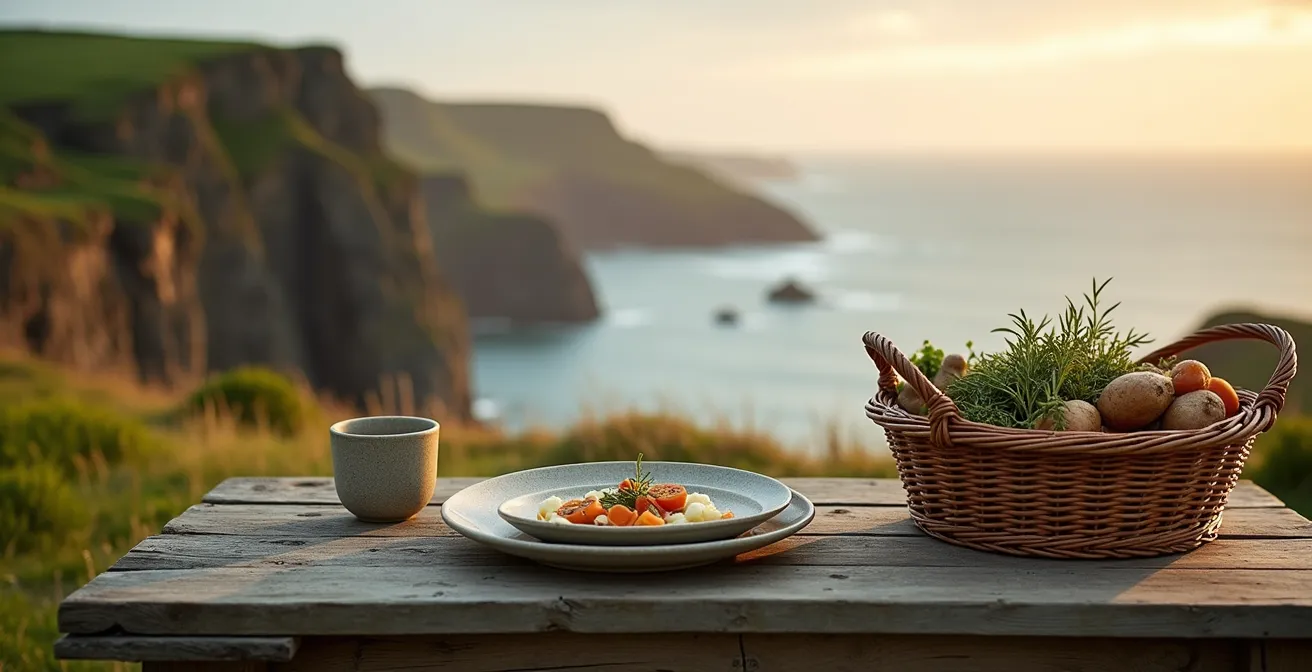
The key to an unforgettable Irish food journey is swapping tourist clichés for hyper-local experiences, a strategy that requires savvy planning on everything from car rentals to festival choices.
- Ireland’s true culinary heart lies not in Dublin’s Temple Bar, but in regions like West Cork, celebrated for its world-class, farm-to-table dining.
- Budgeting correctly means understanding uniquely Irish costs, like mandatory car rental insurance not covered by Canadian credit cards.
Recommendation: Prioritize your travel style—heritage or modern—to choose the right food festivals, and book B&Bs directly 6-9 months in advance to secure the best rooms and rates.
For any Canadian foodie, the thought of a culinary trip to Ireland conjures images of cozy pubs, hearty stews, and the perfect pint of Guinness. It’s a compelling vision, steeped in a shared heritage of rolling green landscapes and a certain friendly charm. This vision often leads directly to Dublin’s Temple Bar, the Guinness Storehouse, and a well-trodden path of familiar tourist landmarks. While enjoyable, this journey only scratches the surface of the island’s gastronomic soul.
The truth is, Ireland is in the midst of a profound culinary renaissance, one that’s happening far from the bustling city centers. It’s a revolution led by chefs, farmers, and artisans who are rediscovering and reinventing Irish food with a fierce commitment to local ingredients. But what if the real secret to unlocking this authentic experience isn’t about what you add to your itinerary, but what you choose to leave out? This guide is built on a counter-intuitive premise: to truly taste Ireland, you must deliberately sidestep the clichés and learn the practical realities of travel there, from navigating its unique car rental quirks to mastering the art of festival-going like a local.
This guide provides a roadmap for the discerning Canadian traveller. We will explore the tangible benefits of choosing rising culinary regions over crowded hubs, compare the real value of iconic food festivals, and offer concrete strategies for navigating common logistical hurdles like gluten-free dining, packing for unpredictable weather, and securing affordable accommodation and transportation. Prepare to discover an Ireland that’s richer, more flavourful, and more authentic than you ever imagined.
Summary: Planning Your Authentic Irish Food Adventure from Canada
- Why You Should Skip Temple Bar and Eat in West Cork Instead?
- Galway Oyster Festival vs. Taste of Dublin: Which Offers Better Value for Money?
- How to Eat Gluten-Free at Traditional Irish Food Festivals?
- The Packing Mistake That Ruins Outdoor Food Festival Experiences in September
- When to Book Your B&B for St. Patrick’s Week to Avoid Paying Double?
- Why Is Renting a Car in Ireland 30% More Expensive Than in Nova Scotia?
- Atlantic Mackerel: Why Is This Underrated Fish a Superfood?
- Cabot Trail vs. Wild Atlantic Way: Which Road Trip Offers the Best Coastal Views?
Why You Should Skip Temple Bar and Eat in West Cork Instead?
The typical tourist path through Dublin leads straight to Temple Bar, a vibrant but often overpriced district where the promise of authentic “craic” can feel manufactured. For the serious Canadian foodie, a more rewarding journey lies southwest in West Cork. This region, often called the “gourmet capital of Ireland,” embodies a hyper-local food philosophy where the distance from farm to fork is measured in footsteps, not kilometres. It’s a landscape dotted with artisan cheesemakers, independent smokehouses, and bustling farmers’ markets.
The evidence of this culinary density is startling. It’s a place where you can find world-class dining in the most unassuming locations. In fact, a recent report highlighted that West Cork is home to two Michelin-starred restaurants in villages with populations under 200, a testament to the area’s incredible ingredient quality and talent. This is not a place you stumble upon; it’s a destination you seek out for its unparalleled commitment to terroir. One prime example is Chef Rob Krawczyk’s Restaurant Chestnut in Ballydehob (population: 200), which earned a Michelin star within five months of opening by crafting its entire menu from ingredients sourced within a 10-kilometer radius.
Instead of a generic pub meal, imagine a day spent starting at the Bantry Friday market for artisan cheese and salami, followed by a visit to Gubbeen Cheese farm, and finishing with fresh-off-the-boat crab claws at the Fish Kitchen in Macroom. This is the tangible, taste-able difference of choosing authentic regionality over urban convenience. It’s a conscious decision to trade the crowds for character, and the reward is a deeper, more memorable connection to Ireland’s true culinary spirit.
Galway Oyster Festival vs. Taste of Dublin: Which Offers Better Value for Money?
Choosing the right food festival is about aligning the experience with your travel goals. For Canadians, two major events present a distinct choice: the historic Galway International Oyster & Seafood Festival and the contemporary Taste of Dublin. While both celebrate Irish food, they offer vastly different interpretations of value. Your decision should hinge on whether you seek authentic heritage or modern culinary innovation.
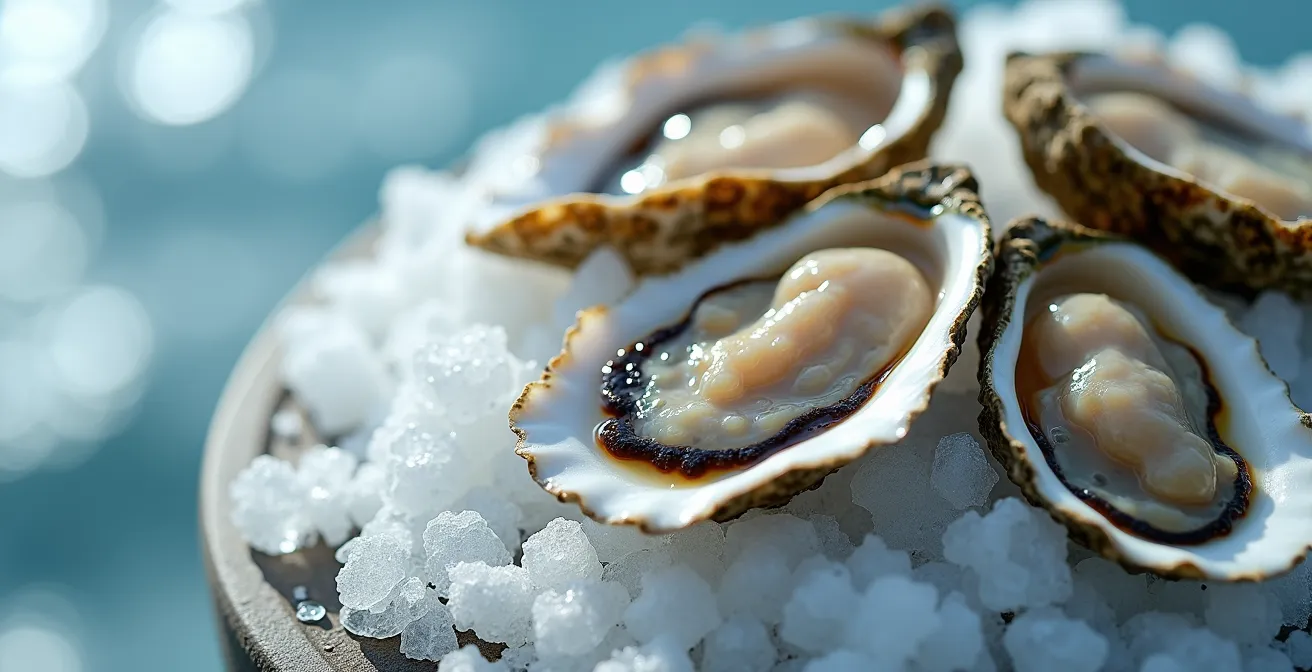
The Galway Oyster Festival, born in 1954, is an immersive dive into Ireland’s coastal culture. Set against the rugged Atlantic backdrop, its focus is singular and profound: celebrating the native Galway oyster. The atmosphere is rustic and deeply local, filled with traditional music, oyster shucking championships, and a palpable sense of community heritage. It’s less about celebrity chefs and more about the fishermen and families who have worked the oyster beds for generations.
Conversely, Taste of Dublin is a modern, urban festival set in the elegant Iveagh Gardens. It showcases a diverse array of cuisines from Dublin’s top restaurants, offering a snapshot of the city’s contemporary food scene. It’s a place to sample trendy dishes, watch chef demonstrations, and experience the polished side of Irish gastronomy. The following table breaks down the core differences to help you decide where your money and time are best spent.
This side-by-side comparison, drawn from numerous visitor reviews and festival guides, helps clarify the choice. A trip to Galway offers a taste of history, while Dublin presents a taste of the now.
| Festival Aspect | Galway Oyster Festival | Taste of Dublin |
|---|---|---|
| Focus | Single ingredient – oysters | Diverse cuisines |
| Atmosphere | Traditional, rustic, local | Modern, chef-driven, urban |
| Cultural Immersion | Authentic Irish coastal culture | Contemporary food innovation |
| Best For | Heritage seekers | Culinary explorers |
How to Eat Gluten-Free at Traditional Irish Food Festivals?
Navigating food festivals with dietary restrictions can be daunting, but for those needing to eat gluten-free in Ireland, there’s good and challenging news. The good news is that awareness is remarkably high. As one travel writer notes, “Ireland has one of the highest rates of Celiac disease in Europe,” a fact that has pushed the food industry to adapt. This isn’t just an anecdotal observation; it’s a public health reality that directly impacts food availability.
Ireland has one of the highest rates of Celiac disease in Europe
– The Creative Adventurer, The Ultimate Foodie’s Guide to Ireland
The sheer numbers explain this high level of awareness. According to official estimates, there are approximately 100,000 people with celiac disease and a further 450,000 who are gluten intolerant in Ireland. This means that at any given festival, you are likely to find vendors who not only understand what “gluten-free” means but also actively cater to it. Look for menus with “GF” symbols and don’t hesitate to speak directly with vendors. The Irish are generally very accommodating and knowledgeable.
However, the challenge lies in traditional offerings. Many classic Irish foods—like battered fish, meat pies, and anything served with traditional brown bread—are inherently gluten-heavy. Your best strategy is to focus on naturally gluten-free dishes. Think seafood platters (oysters, mussels, prawns), hearty vegetable soups (ask if they’re thickened with flour), grilled meats, and salads. Many artisan producers at farmers’ markets and festivals now offer gluten-free baked goods, so keep an eye out for dedicated stalls. Always communicate your needs clearly, asking about cross-contamination if you have celiac disease, but rest assured that you’re in a country that understands the issue better than most.
The Packing Mistake That Ruins Outdoor Food Festival Experiences in September
September in Ireland is a magical time for food festivals, but it’s also when the weather becomes notoriously fickle. The single biggest mistake a Canadian traveller can make is underestimating the Irish damp and, more importantly, the Atlantic wind. Packing a simple waterproof jacket isn’t enough. The key to staying comfortable while hopping between food stalls is a layered, weatherproof system designed to combat both rain and the persistent, energy-sapping windchill.
A truly effective packing strategy focuses on materials and functionality. A windproof jacket is non-negotiable; it acts as a shell to stop the wind from cutting through your layers. Beneath that, a merino wool base layer is a game-changer. It regulates body temperature, wicks moisture, and resists odour, making it perfect for long days outdoors. For footwear, leave the sneakers at home. Festival grounds can quickly turn muddy. A pair of waterproof boots, like Blundstones, will keep your feet dry and comfortable. These small, strategic choices make the difference between happily enjoying a bowl of chowder in a light drizzle and being miserably cold and wet.

This flat lay of essential gear illustrates the concept perfectly: function over fashion, with a focus on high-performance, weatherproof items. To ensure you’re fully prepared, use the following checklist when packing for your trip.
Your Essential Packing Checklist for Irish Food Festivals
- Pack a windproof jacket (not just waterproof) to combat Atlantic windchill.
- Wear waterproof boots like Blundstones instead of sneakers for muddy conditions.
- Include a merino wool base layer for temperature regulation and odor resistance.
- Bring a compact, quick-dry towel for unexpected weather changes.
- Pack a small waterproof bag for protecting electronics and documents.
When to Book Your B&B for St. Patrick’s Week to Avoid Paying Double?
Planning a trip around St. Patrick’s Day requires a strategic approach to booking accommodation, especially for the coveted family-run B&Bs that offer the most authentic Irish hospitality. The common assumption is to book as early as possible, and while that’s generally true, the timing is more nuanced. The sweet spot for securing the best rooms at the best value is 6 to 9 months in advance. This is when B&B owners have their availability open but before the major tour operators have block-booked huge swaths of inventory.
Booking directly with the B&B owner is paramount. Many owners reserve their best rooms—those with better views or quieter locations—for guests who contact them directly, bypassing the commissions of large online travel agencies. This direct relationship can also lead to better advice and a warmer welcome. However, if you miss this initial window, don’t despair. A second, smaller opportunity often opens up 3 to 4 weeks prior to the travel date. This is when tour companies release their unused room blocks, creating a brief surge of last-minute availability, though often at less favourable rates.
For those looking to maximize savings during this peak period, a “hub-and-spoke” strategy can be incredibly effective, potentially saving you up to 50% on accommodation costs compared to staying in central Dublin.
Case Study: The Hub-and-Spoke Accommodation Strategy
Travelers staying in coastal commuter towns like Malahide or Howth, which are easily accessible via the DART train, can save significantly during St. Patrick’s Week. By booking a B&B in one of these charming seaside villages, they can enjoy rates up to 50% lower than in central Dublin. This approach allows for easy access to the main parade and events via a short train ride, while also offering the chance to experience more authentic local celebrations and seaside pubs in the evenings, away from the overwhelming crowds of the city center.
Why Is Renting a Car in Ireland 30% More Expensive Than in Nova Scotia?
Many Canadians landing in Dublin are shocked by the final price of their rental car, which often ends up being significantly higher than the initial quote. While the base rental rates may seem comparable to places like Nova Scotia, the major difference lies in one crucial, and often mandatory, element: Collision Damage Waiver (CDW) insurance. In Ireland, this is not a simple add-on; it’s a complex and costly necessity that creates what can be called the “insurance paradox.”
The primary reason for this is that most North American credit cards, including the vast majority of VISA, Mastercard, and American Express cards issued in Canada, have explicitly withdrawn their complimentary rental car insurance coverage for the Republic of Ireland. Car rental companies and insurers point to the country’s narrow, winding roads, often bordered by ancient stone walls, which lead to a higher frequency of scrapes, dings, and mirror damage. Because your Canadian credit card’s insurance is likely invalid, the rental desk will require you to purchase their own CDW policy. As Rick Steves’ travel guide points out, this basic CDW can cost an extra €15-€30 per day.

But the costs don’t stop there. This basic CDW often comes with a very high deductible (excess), typically between €1,500 and €3,000. To eliminate this deductible, rental companies will offer a “Super CDW” policy for an additional €10-€30 per day. This is why a car that was quoted at €40 per day can suddenly cost €90 at the desk. There are very few exceptions; only a handful of premium Canadian cards like the World Elite Mastercard *may* still offer coverage, but this requires obtaining a “letter of coverage” beforehand and you may still face resistance at the rental counter. The safest approach is to budget for both the CDW and Super CDW as a mandatory, non-negotiable cost of your trip.
Atlantic Mackerel: Why Is This Underrated Fish a Superfood?
While salmon and cod often steal the spotlight, the humble Atlantic mackerel is a true hero of the Irish coast and an underrated superfood that Canadian foodies should actively seek out. This oily, flavourful fish thrives in the cold, clear waters of the North Atlantic, and the Irish have a long tradition of preparing it with beautiful simplicity. What makes Irish mackerel special is the environment itself; the nutrient-rich waters create a fish that is exceptionally high in Omega-3 fatty acids, far more so than many of its warmer water counterparts.
The health benefits are immense. Omega-3s are crucial for brain health, reducing inflammation, and supporting cardiovascular function. But beyond its nutritional profile, mackerel offers a robust, satisfying flavour that stands up to strong pairings. It’s a cornerstone of what could be called the “Atlantic Pantry”—a collection of world-class ingredients shared by the coastlines of Ireland and Canada’s Maritimes.
For Canadians wanting to connect with this flavour at home, look for wild-caught Atlantic mackerel from Irish or Scottish waters at specialty fish markets. The most traditional Irish preparation is to pan-fry the fish with an oatmeal crust, which creates a wonderful textural contrast. It is often served with a sharp, sweet rhubarb compote, a classic pairing that cuts through the richness of the fish. Smoked mackerel is another delicacy, perfect for flaking into salads or making a simple paté with cream cheese and lemon. Don’t be afraid to embrace this flavourful fish; it’s a direct taste of the wild Atlantic.
Key Takeaways
- Prioritize hyper-local food scenes like West Cork over tourist hubs like Temple Bar for a more authentic and higher-quality culinary experience.
- Factor in the mandatory cost of CDW and Super CDW insurance when budgeting for a rental car, as Canadian credit card coverage is generally not accepted.
- Book accommodations 6-9 months in advance directly with B&Bs, and pack a layered system including a windproof jacket for unpredictable festival weather.
Cabot Trail vs. Wild Atlantic Way: Which Road Trip Offers the Best Coastal Views?
For a Canadian, especially one from the East Coast, the comparison is inevitable: how does Ireland’s famed Wild Atlantic Way stack up against the iconic Cabot Trail? Both offer breathtaking coastal vistas and a powerful sense of being at the edge of the world. While the Cabot Trail’s dramatic highlands and cliffside views are spectacular, the Wild Atlantic Way distinguishes itself for the foodie traveller through the sheer density and diversity of its culinary stops. It’s not just a drive; it’s a 2,500-kilometre-long larder.
The journey along the Wild Atlantic Way is punctuated by opportunities to taste the landscape. You can be shucking fresh oysters at Moran’s on the Weir in Galway in the afternoon and then settling into a Dingle pub for a seafood platter that evening. The route is woven with whiskey distilleries, craft breweries, and artisan cheese producers that are destinations in their own right. The social fabric of the “craic”—the spontaneous pub music sessions and lively conversation—is an ever-present part of the experience, offering a different kind of social flavour than the more scheduled ceilidhs or community lobster suppers you might find along the Cabot Trail.
This isn’t to say one is better than the other, but that they offer different rewards. The Cabot Trail is a magnificent, concentrated scenic drive. The Wild Atlantic Way is a sprawling, epic culinary pilgrimage. The table below offers a culinary comparison for the road-tripping foodie.
| Aspect | Wild Atlantic Way | Cabot Trail |
|---|---|---|
| Seafood Quality | Fresh oysters, locally smoked fish | Lobster rolls, Maritime chowder |
| Farm-to-Table | Artisan cheese producers, organic farms | Local farmers’ markets |
| Distillery/Brewery Access | Whiskey distilleries, craft breweries | Craft breweries, cider houses |
| Social Scene | Spontaneous pub music (‘craic’) | Scheduled ceilidhs, lobster suppers |
By embracing these strategies and insights, your culinary trip to Ireland can transform from a standard vacation into a deeply personal and delicious exploration of a culture in full bloom. Start planning your authentic Irish food adventure today.
Frequently Asked Questions about Planning Your Irish Trip
When should I book for best rates?
For family-run B&Bs, the ideal window to book for the best value and room selection is 6 to 9 months in advance of your travel dates. This allows you to secure your spot before tour operators make large block bookings.
Is there a last-minute opportunity window?
Yes, a second chance often appears 3 to 4 weeks before your desired stay. This is when tour operators release their unused room blocks back to the B&Bs, creating a short-term increase in last-minute availability.
Should I book through online travel agencies?
No, it is highly recommended to book directly with the B&B owners via their own website or by phone. Owners often reserve their best rooms (e.g., those with better views or in quieter locations) for direct bookings and can offer more competitive rates by avoiding agency commissions.