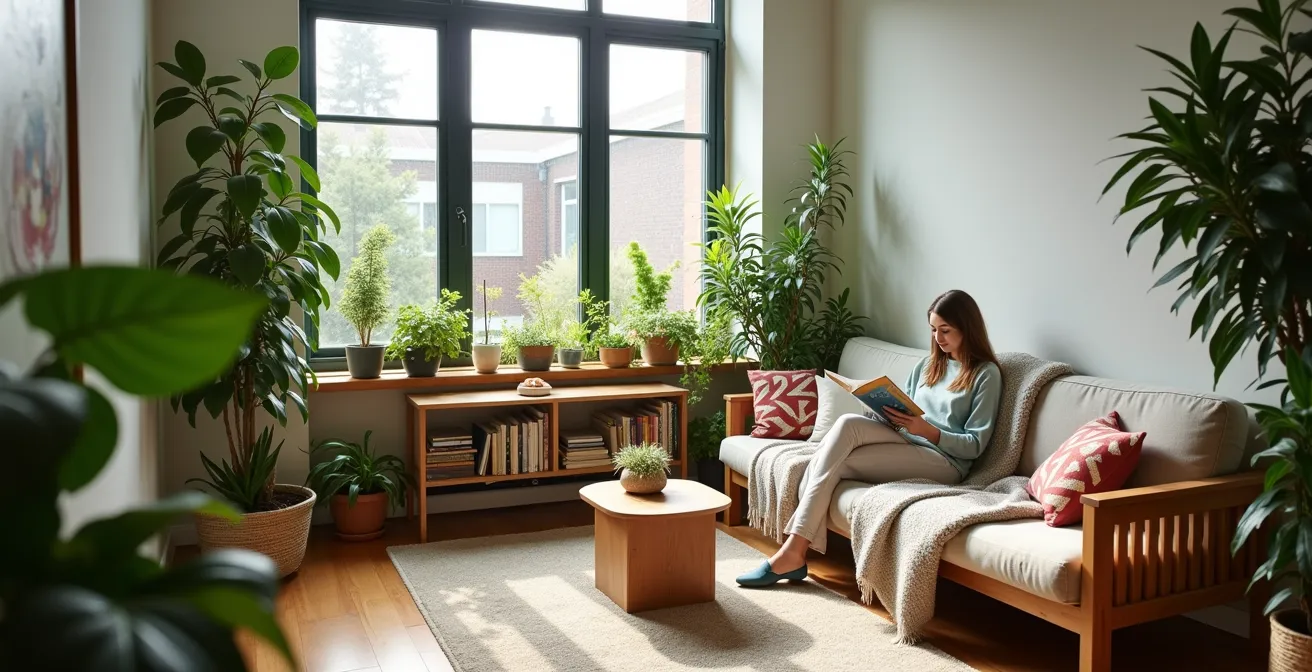
When long, dark winters in Canada or Ireland trigger cabin fever in a small apartment, the solution isn’t just adding more plants. The key to genuine well-being is a deeper form of biophilic design focused on sensory curation. By consciously choosing specific wood tones, light temperatures, and natural textures, you can actively regulate your nervous system, reduce stress, and transform your home into a psychologically warm refuge that combats the seasonal blues.
The walls of a small apartment can feel like they’re closing in during the long, dark winters common to places like Canada and Ireland. This feeling, often called “cabin fever,” is a genuine psychological response to prolonged indoor confinement. The typical advice is often simplistic: buy a few houseplants and hope for the best. While plants are beneficial, this approach barely scratches the surface of what’s possible and often fails to address the root of the issue.
True relief comes from a more profound strategy: biophilic design. This isn’t merely about decorating with nature’s aesthetic, but about systematically integrating natural elements to create a habitat that supports our innate biological and psychological needs. It’s about understanding that our bodies react to our surroundings on a primal level. The texture of a wool blanket, the specific warmth of a light bulb, the scent of simmering spices—these aren’t just details; they are sensory inputs that can calm our nervous system and foster a sense of security.
But what if the real key to conquering cabin fever isn’t just adding natural objects, but consciously curating your home’s sensory experience to counteract the bleakness of the outdoors? The secret lies in understanding the “why” behind each choice. It’s about selecting an oak finish not just for its look, but for its proven ability to lower stress hormones. It’s choosing a 2700K light bulb not for its ambiance, but for its power to support your circadian rhythm when sunlight is scarce. This is neuro-aesthetics in practice.
This guide will walk you through the science and strategy of using biophilic design as a powerful tool for mental well-being. We will explore how to make specific, impactful choices regarding materials, sound, light, and even temperature to transform your small apartment from a winter prison into a restorative sanctuary.
To help you navigate these principles, this article is structured to provide clear, actionable insights. The following summary outlines the key areas we will cover, from the psychological impact of wood tones to creating a cozy “koselig” atmosphere in even the draftiest of rental spaces.
Summary: A Strategic Guide to Biophilic Winter Wellness
- Pine vs. Oak: Which Wood Tone Creates a Warmer Psychological Effect?
- Sound Dampening: How to Reduce Echo in Minimalist Rooms Without Clutter?
- The “Death Cleaning” Method: How to Declutter Without Being Morbid?
- Solid Wood vs. Veneer: Which Lasts Longer in a Dry, Heated Home?
- The Storage Error That Cracks Bodhrán Skins in Winter
- 65°F vs. 70°F: What Is the Ideal Temperature for Deep REM Sleep?
- Kelvin Scale: Why Should You Never Use 5000K Bulbs in the Living Room?
- How to Create a “Koselig” Atmosphere in a Drafty Canadian Rental Apartment?
Pine vs. Oak: Which Wood Tone Creates a Warmer Psychological Effect?
The choice between different woods is far more than an aesthetic one; it’s a decision that directly influences your psychological state. While lighter woods like pine can feel airy and bright, they can sometimes lack the grounding presence needed to create a sense of security and psychological warmth. Medium-toned woods, particularly oak, have a more substantial and comforting effect on our nervous system.
The reason lies in our evolutionary connection to nature. Our brains are wired to find comfort in environments that signal safety and stability. The rich, steady grain and warm tones of oak subconsciously communicate these qualities. Research from the University of British Columbia has shown that visual exposure to wooden surfaces can generate physiological responses that reduce stress. The study specifically found that oak elements led to increased activity in the parasympathetic nervous system, which is responsible for our “rest and digest” calming response.
This isn’t just a feeling; it’s measurable. Further research on biophilic responses to different wood types indicates exposure to oak environments can lead to a 10% reduction in blood pressure and a 15% decrease in stress hormone levels. For someone feeling the pressure of cabin fever, incorporating oak furniture or flooring is a direct intervention to create a calmer internal state. Whether it’s the bright optimism of Canadian maple in a north-facing room or the resilient character of Irish ash, choosing the right wood is a foundational step in crafting a restorative home.
Sound Dampening: How to Reduce Echo in Minimalist Rooms Without Clutter?
In a small, minimalist apartment, sound can be a major source of stress. Hard surfaces like plasterboard walls and bare floors cause sound waves to bounce around, creating a harsh, echoing environment that keeps our nervous system on high alert. The challenge is to soften this acoustic landscape without adding visual clutter. Biophilic design offers elegant solutions by using natural, textured materials that absorb sound rather than reflect it.
The key is to introduce soft, irregular surfaces that trap and scatter sound waves. Think of the way moss on a forest floor muffles footsteps. You can replicate this effect by incorporating materials with complex, three-dimensional textures. Instead of adding bulky furniture, consider functional art that doubles as an acoustic treatment. A custom-made acoustic panel, for instance, can be a beautiful focal point while significantly reducing echo.

As this image demonstrates, a simple wooden frame wrapped in a natural, textured fabric like Irish tweed not only adds a touch of local character but also effectively dampens sound. The intricate weave of the fabric works to break up sound waves on contact. By layering these solutions, you can create a room that feels both open and acoustically serene, a true refuge from the noise of the outside world. This approach prioritizes sensory comfort over mere aesthetics.
Here are some practical, clutter-free ways to improve your apartment’s acoustics:
- Install vertical gardens with dense-leafed plants like Fatsia japonica to scatter sound waves.
- Create DIY acoustic panels using rock wool wrapped in high-resolution prints of natural landscapes.
- Use authentic Irish tweed or iconic Hudson’s Bay blankets as decorative, sound-absorbing wall hangings.
- Layer natural fiber rugs (like wool or jute) to absorb sounds reflected from the floor.
- Position furniture slightly away from walls to prevent the amplification of sound in corners.
The “Death Cleaning” Method: How to Declutter Without Being Morbid?
The concept of “döstädning,” or Swedish death cleaning, can sound morbid, but its core principle is profoundly biophilic and life-affirming when reframed. Instead of seeing it as preparing for an end, we can adopt the mindset of “habitat pruning.” In a forest, weaker branches are shed to allow sunlight and air to reach the healthier parts of the tree, promoting vigorous growth. Similarly, decluttering our home isn’t about loss; it’s about removing what no longer serves us to make space for light, air, and life.
This is especially critical in a small apartment where every object competes for limited sensory bandwidth. A space filled with synthetic, meaningless items can create a low-grade, constant stress. By pruning these items, you create a “savanna,” an environment with open sightlines and clear refuge points that our brains are wired to find calming. This process involves making conscious choices to replace multiple synthetic items with fewer, higher-quality pieces made from natural materials.
Case Study: The Biophilic Succession Approach
Small apartment dwellers who adopted the “habitat pruning” mindset reported significant psychological benefits. By replacing multiple plastic storage bins with a single wooden chest or several synthetic throws with one high-quality wool blanket, they not only maintained functionality but also created 30% more perceived space. This shift from accumulation to curation reframed the act of decluttering as a positive, growth-promoting activity rather than one focused on loss.
This pruning process helps you build a more intentional relationship with your surroundings. You are not just getting rid of things; you are actively cultivating a healthier habitat. Each item that remains should have a purpose, a natural origin, or a deep personal meaning, contributing to an environment that supports your well-being rather than draining your energy.
Action Plan: Audit Your Apartment’s Biophilic Health
- Points of Contact: List all the sensory channels in your main room. What do you see (light quality, color), hear (echo, street noise), and touch (textures of surfaces) most often?
- Collection: Inventory the key items in your space. Make two columns: one for items made of synthetic materials (polyester, plastic, laminate) and one for natural materials (wood, wool, linen, stone).
- Coherence: Confront your inventory with your goal. Do these items contribute to a sense of psychological warmth and calm, or do they feel cold, artificial, and dissonant?
- Memorability & Emotion: Identify which items feel authentic, tell a story, or connect you to nature (e.g., a piece of driftwood, an inherited wooden bowl) versus those that are generic and disposable.
- Integration Plan: Create a priority list. Start by replacing one or two key synthetic items with a single, high-quality natural alternative to immediately improve the room’s sensory profile.
Solid Wood vs. Veneer: Which Lasts Longer in a Dry, Heated Home?
In the dry, centrally heated environments of Canadian and Irish winters, the choice between solid wood and veneer is crucial for both longevity and psychological well-being. While veneer can offer a wood-like appearance at a lower cost, its performance and impact in these conditions are starkly different from solid wood. The answer to which lasts longer is nuanced: solid wood endures and ages, while veneer is more prone to failure.
Solid wood is a living material that responds to its environment. In dry air, it will release moisture and contract. This can sometimes lead to small cracks or checks, but these are often seen as part of its character—a concept known as wabi-sabi, or the beauty of imperfection. These pieces can be repaired, oiled, and maintained for generations. Veneer, a thin layer of wood glued to a substrate like particleboard, is far more vulnerable. Extreme dryness can cause the adhesive to fail, leading to peeling, chipping, or bubbling that is difficult or impossible to repair.

Beyond durability, the psychological impact is significant. A solid wood piece that ages gracefully becomes a comforting, stable presence in the home. Its unique, non-repeating fractal grain patterns are subconsciously soothing to the brain. In contrast, a deteriorating veneer piece can become a source of low-grade stress, a constant visual reminder of imperfection and decay. Furthermore, certain solid woods like Canadian Cedar or Pine release phytoncides, airborne compounds that have been shown to reduce stress—a benefit completely absent in inert veneer.
This comparative analysis highlights the key differences for a dry, heated home:
| Feature | Solid Wood | Veneer |
|---|---|---|
| Dry Winter Durability | Develops patina, may crack but repairable | Peeling risk in extreme dryness |
| Psychological Impact | Ages gracefully, wabi-sabi effect | Deterioration causes low-grade stress |
| Phytoncide Release | Yes – Canadian Cedar/Pine emit stress-reducing compounds | No – inert material |
| Visual Authenticity | Unique fractal grain patterns | Repetitive patterns can be subconsciously jarring |
| Humidity Response | Expands/contracts naturally | Adhesive failure possible |
The Storage Error That Cracks Bodhrán Skins in Winter
For anyone in Ireland with a passion for traditional music, the sound of a bodhrán skin cracking in the dead of winter is a painful one. This isn’t just a random accident; it’s a clear symptom of a common environmental error in modern homes: excessively dry indoor air. Central heating systems, essential for surviving a Canadian or Irish winter, strip moisture from the air, causing humidity levels to plummet. This dry air pulls moisture from everything, including natural materials like the goatskin of a bodhrán, wooden furniture, our skin, and our respiratory systems.
The cracking drum skin is a canary in the coal mine, signaling an unhealthy indoor environment. The ideal indoor humidity level for both human health and the preservation of natural materials is between 40-50%. Below this, we can experience dry skin, irritated sinuses, and increased susceptibility to viruses. For renters who can’t install a whole-home humidifier, the solution lies in creating localized “micro-climates” of humidity using simple, biophilic strategies.
The goal is to reintroduce moisture into your immediate living space in a gentle, sustained way. This not only protects your belongings but also makes the air more comfortable to breathe and can even make the room feel warmer at a lower temperature. By strategically placing sources of moisture, you can create a more balanced and healthy habitat without major renovations.
Here are some natural humidity solutions perfect for renters:
- Group tropical plants like ferns, calatheas, or spider plants together; their collective transpiration creates a natural humidity micro-climate.
- Place decorative bowls of water (add floating flowers or river stones for aesthetics) on or near heat sources like radiators to encourage evaporation.
- Use a stylish, decorative drying rack for laundry in your main living area, turning a chore into a functional, passive humidifier.
- Position small, portable humidifiers behind large plant groupings to disguise their function while maximizing their effect.
- Invest in an inexpensive digital hygrometer to monitor your apartment’s humidity, allowing you to make adjustments and maintain the optimal 40-50% range year-round.
65°F vs. 70°F: What Is the Ideal Temperature for Deep REM Sleep?
One of the most powerful and overlooked levers for combating the mental fatigue of cabin fever is optimizing sleep quality. A common mistake is keeping the bedroom too warm. While a cozy room feels nice, a temperature of 70°F (21°C) or higher can significantly interfere with your body’s natural sleep processes. For deep, restorative sleep, a cooler environment is essential. Your body’s core temperature needs to drop to initiate and maintain sleep, and a warm room actively works against this biological need.
The scientific consensus points to a much cooler ideal. According to sleep research in temperate climates, a bedroom temperature of around 65°F (18.3°C) can improve the quality of REM sleep by as much as 15% compared to sleeping at 70°F. This cooler temperature helps your body reach the deeper stages of sleep more efficiently, which is crucial for mental processing, emotional regulation, and feeling truly rested.
Achieving this in a drafty Canadian rental or a damp Irish home isn’t about cranking the thermostat down and shivering all night. It’s about smart, natural temperature regulation. The goal is to create a cool sleeping environment while using insulating, breathable materials to create a warm personal micro-climate around your body. This combination of a cool room and a warm bed is the formula for optimal sleep.
Here are some natural strategies to regulate your sleeping temperature:
- Use breathable, natural bedding like linen or wool. These materials, with strong Irish and Canadian heritage, are excellent at regulating temperature—keeping you warm without causing overheating.
- Install heavy, insulated curtains, especially in Canadian homes, to block cold drafts from windows during the winter.
- In a damp Irish winter, consider using a small dehumidifier in the bedroom. Dry air feels warmer and less “clammy,” allowing you to be comfortable at a lower ambient temperature.
- Create thermal variability during the day by opening a window for a few minutes, even in winter, to flush out stale air and cool the room down before night.
- Layer natural materials (e.g., a wool blanket over a linen duvet) for adjustable comfort that doesn’t rely on synthetic, non-breathable fabrics.
Key Takeaways
- True biophilic design is about sensory curation—consciously managing light, sound, and texture to support your nervous system, not just adding plants.
- Your choice of materials and lighting has a measurable biological impact; warm-toned wood like oak and 2700K lighting can actively reduce stress and fight seasonal affective symptoms.
- Creating a “koselig” or cozy refuge in a small, drafty apartment is achievable with non-permanent solutions like layered textiles, targeted warmth, and natural draft blockers.
Kelvin Scale: Why Should You Never Use 5000K Bulbs in the Living Room?
Light is arguably the most powerful environmental cue for our bodies, directly regulating our sleep-wake cycle, mood, and energy levels. During the short, grey days of a Canadian or Irish winter, indoor lighting becomes our primary source of this crucial input. However, not all light is created equal. Using the wrong “color temperature,” measured in Kelvin (K), can disrupt your circadian rhythm and worsen feelings of anxiety and fatigue. A common mistake is using bulbs labeled “daylight” (typically 5000K or higher) in living spaces, especially in the evening.
While 5000K light mimics the bright, blue-toned light of midday sun and can be useful for task-oriented areas during the day, exposing yourself to it in the evening is like telling your brain it’s noon when it should be preparing for rest. This harsh, cool light suppresses the production of melatonin, the hormone that signals sleep, making it harder to wind down and disrupting sleep quality. It creates a sterile, office-like atmosphere that is the antithesis of a relaxing refuge.
For living areas, the goal is to mimic the natural progression of sunlight. This means using warmer, lower-Kelvin bulbs that replicate the golden tones of sunrise and sunset. Lighting in the 2700K to 3000K range is ideal for creating a calm, soothing environment in the evenings. This isn’t just about ambiance; it’s a medical intervention. Studies have shown that using warm lighting can have a significant positive effect on mood, with research on seasonal affective disorder and lighting showing that 2700K-3000K lighting can reduce SAD symptoms by up to 23% in Irish winter conditions. The concept is to create a “digital campfire”—a pool of warm, flickering light that signals safety and rest to our primal brain.
To implement this, consider a layered lighting schedule:
- Morning (7-9 am): Use a 2700K smart bulb to simulate a gentle sunrise, easing you into the day.
- Midday (10 am-3 pm): If you work from home, switch to a brighter, 4000K task light in your workspace for focus, while keeping ambient light warm.
- Evening (4-7 pm): Transition all lights back to 3000K as the sun sets outside.
- Night (7 pm+): Dim all lights to a very warm 1800K-2200K, creating that “digital campfire” effect to promote relaxation.
- Layer multiple light sources (floor lamps, table lamps) at different heights to create pools of light and shadow, mimicking the effect of a natural forest canopy.
How to Create a “Koselig” Atmosphere in a Drafty Canadian Rental Apartment?
The Norwegian concept of “koselig” (or the similar Danish “hygge”) is the ultimate antidote to cabin fever. It’s a feeling of coziness, contentment, and safety from the harshness of the outside world. Creating this atmosphere in a small, drafty, and often characterless rental apartment in Canada or Ireland can seem daunting, but it’s entirely achievable without any permanent changes. It’s about using biophilic principles to build a sensory “nest.”
The strategy is to create a protected micro-nook—a designated corner or chair that becomes your sanctuary. This involves layering sensory cues that signal warmth, safety, and life. It’s not about redecorating the whole apartment, but about concentrating your efforts to create one undeniably cozy spot. This means blocking drafts, adding soft textures, introducing gentle, warm light, and even incorporating comforting scents.
This “koselig” corner should be a multi-sensory experience. A tall plant like a snake plant can serve as a beautiful, living draft blocker. A cluster of high-quality, flickering LED candles on a wooden tray provides the primal comfort of fire without the risk or restrictions of a rental agreement. Layering natural textiles, like a chunky wool throw and linen cushions, provides tactile warmth and comfort that synthetic materials cannot replicate. Even scent plays a role; gently simmering cinnamon and orange peel in Canada, or apples and cloves in Ireland, can instantly make a space feel like home.

The goal is to build a refuge that appeals to all your senses, a place your body recognizes as safe and restorative. By focusing your resources on one area, you can achieve a profound sense of comfort that radiates throughout the rest of the small space.
Here’s how to create that “koselig” feeling without calling the landlord:
- Create a focal point of warmth with clusters of safe, realistic LED candles arranged on rustic wooden trays with natural elements like pinecones or stones.
- Use natural scents: simmer cinnamon sticks and orange peel on the stove in Canada, or apples and cloves in Ireland, for an authentic, comforting aroma.
- Employ tall plants, like snake plants or fiddle-leaf figs, as attractive and natural draft blockers near windows or doors.
- Layer multiple natural textiles—a thick wool throw, soft linen or cotton cushions, a small sheepskin rug—to create irresistible tactile warmth.
- Position your main seating (a favorite armchair) to create a protected micro-nook, with its back to a solid wall and a view of the room’s entrance.
To begin transforming your space from a place of confinement to a sanctuary of well-being, the next logical step is to start with one small, manageable change. Choose one strategy from this guide and implement it this week.