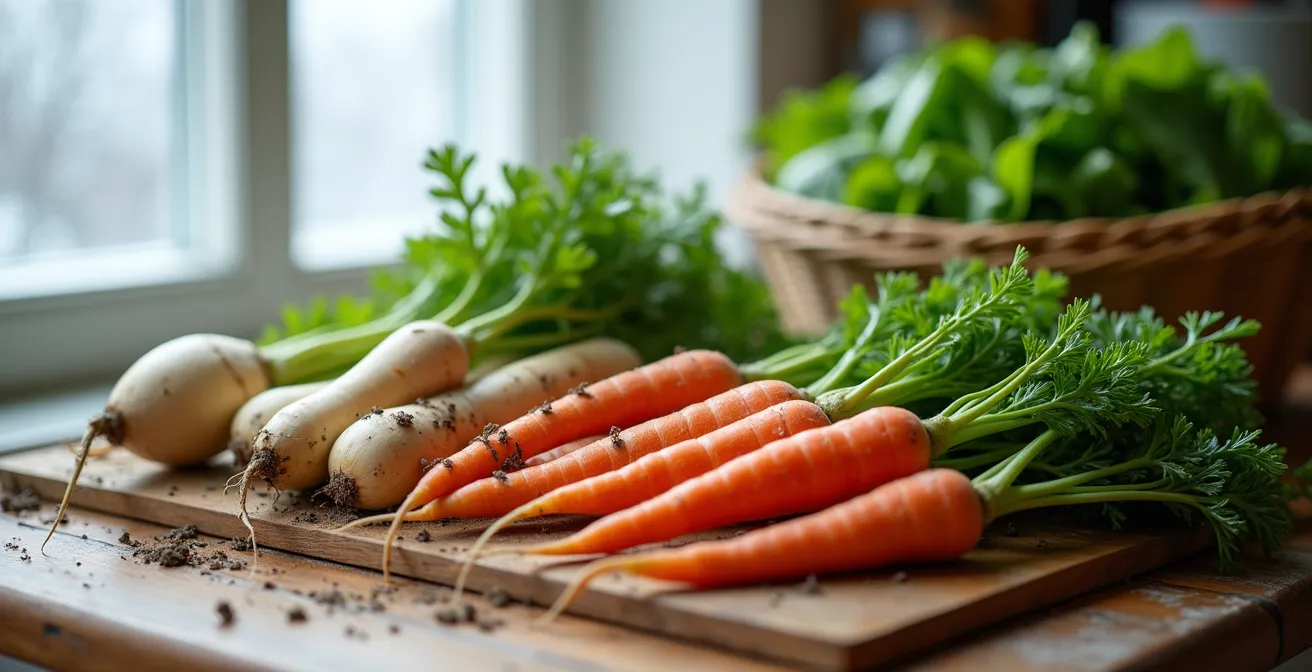
The belief that winter means sacrificing nutrition is a modern myth; the truth is that ancestral Northern foods offer superior, concentrated nourishment.
- Seasonal, local foods like wild game and oily fish provide higher levels of essential nutrients like Omega-3s and Vitamin D than their conventional counterparts.
- Preservation methods like fermentation and flash-freezing not only store food but enhance its bioavailability and probiotic content.
Recommendation: Shift your focus from expensive, depleted imports to a ‘cold-climate pantry’ of local roots, berries, preserved foods, and proteins to build metabolic resilience this winter.
As the days shorten and a chill settles over Canada and Ireland, many health-conscious shoppers face a familiar dilemma in the produce aisle. The vibrant summer berries and crisp greens are gone, replaced by expensive, flavour-drained imports or a seemingly monotonous selection of root vegetables. The common wisdom is to either pay a premium for imported “freshness” or resign oneself to a less nutritious diet until spring. We’re often told to simply make stews and supplement with vitamin pills to get by.
This approach is fundamentally flawed. It overlooks a powerful truth rooted in ancestral wisdom and confirmed by modern nutritional science. The question shouldn’t be how to survive winter with subpar ingredients, but rather how to thrive by embracing the unique, nutrient-dense foods that our northern climates naturally provide. What if the key to exceptional winter health isn’t found in a plastic clamshell of spinach shipped from thousands of miles away, but in the concentrated energy of a wild blueberry frozen at peak ripeness, the rich collagen of a slow-cooked stew, or the living probiotics of homemade sauerkraut?
This article will guide you through a paradigm shift in winter eating. We will explore why specific, locally-available foods are not just alternatives, but are often nutritionally superior choices during the cold months. We’ll delve into the science of how traditional preparation methods unlock nutrients and how you can build a vibrant, powerful, and affordable winter diet based on the incredible bounty of the North.
This guide explores the foundational elements of a Northern winter diet, from creating living fermented foods to understanding the unique benefits of local proteins and cooking methods. Discover how to build a pantry that truly nourishes you through the coldest months.
Summary: Rethinking Winter Nutrition with Local Powerhouses
- Sauerkraut vs. Kimchi: Which Fermented Food Is Easier to Make at Home?
- Atlantic Mackerel: Why Is This Underrated Fish a Superfood?
- Berries vs. Tropical Fruit: Why Are Nordic Berries Better for Blood Sugar Stability?
- Venison vs. Beef: Why Is Wild Game a Healthier Red Meat Option?
- The Winter Pantry: What 5 Staples Should You Stock for Nordic Meals?
- Why Does Slow-Cooking Stew for 6 Hours Change the Nutritional Profile?
- Beeswax Wraps vs. Silicone: Which Actually Keeps Cheese Fresh Longer?
- How to Adapt Traditional Irish Stew Using Local Canadian Ingredients?
Sauerkraut vs. Kimchi: Which Fermented Food Is Easier to Make at Home?
Fermented foods are the cornerstone of an ancestral winter pantry, providing living probiotics that support gut health and immunity when fresh produce is scarce. While both sauerkraut and kimchi are cabbage-based ferments, sauerkraut is decidedly easier for the home cook in a northern climate to master. Its simplicity—requiring only cabbage and salt—makes it an accessible entry point into the world of fermentation. Kimchi, with its longer ingredient list including items like gochugaru (Korean chili flakes) and daikon radish, can be more complex to source and balance.
The key to successful lacto-fermentation is temperature, and this is where Northern homes have an advantage. The process relies on beneficial bacteria that, according to fermentation science research, thrive at typical indoor temperatures of 18-24°C (65-75°F). This makes a kitchen counter in Dublin or a pantry in Ontario the perfect incubator for creating your own probiotic powerhouse without any special equipment.
For those wanting to try a kimchi-style ferment with local ingredients, creativity is key. You can substitute local turnips for daikon and create a smoky spice blend with paprika and cayenne to mimic gochugaru. Adding a piece of dulse seaweed, a traditional Irish ingredient, can also impart a wonderful umami depth. The fundamental technique remains the same: slice, salt, and submerge the vegetables in their own brine to let the magic of fermentation happen.
Ultimately, starting with a simple sauerkraut builds the confidence and understanding of the fermentation process, paving the way for more complex experiments later on.
Atlantic Mackerel: Why Is This Underrated Fish a Superfood?
In the low-light months of a Canadian or Irish winter, maintaining adequate Vitamin D levels is a significant health challenge. While supplements are one option, turning to food sources provides a symphony of co-factors that enhance absorption and offer wider benefits. Atlantic mackerel, a fatty fish abundant in the cold waters off both coasts, is a true superfood in this regard. A single serving contains an astonishing amount of this crucial nutrient, making it a powerful tool for supporting mood, bone health, and immune function.
Beyond its vitamin D content, mackerel is one of the richest sources of marine omega-3 fatty acids (EPA and DHA), which are vital for reducing inflammation and supporting brain health. A common and valid concern with oily fish is mercury content. However, it’s crucial to distinguish between species. As one expert source clarifies:
Atlantic mackerel is one of the fish in the ‘least mercury’ section. It is important to note that this refers to Atlantic mackerel. Other species of the fish, such as Spanish and King mackerel, are relatively high in mercury.
– Nutrition Advance, 9 Health Benefits of Mackerel
This makes the locally available Atlantic mackerel a safe and superior choice. When compared to other regional oily fish, its nutritional profile stands out, as demonstrated by broad nutritional analysis that shows Atlantic mackerel provides 643 IU of vitamin D per 100g serving.
| Fish Type | EPA+DHA per 100g | Vitamin D (IU) | Mercury Level |
|---|---|---|---|
| Atlantic Mackerel | 2670mg | 643 | Low |
| Irish Herring | 2200mg | 294 | Low |
| Canadian Lake Trout | 1600mg | 156 | Moderate |
Incorporating smoked or grilled Atlantic mackerel into your diet 2-3 times a week is a simple, delicious strategy to combat winter deficiencies and nourish your body from within.
Berries vs. Tropical Fruit: Why Are Nordic Berries Better for Blood Sugar Stability?
The desire for fruit in winter often leads us to imported tropical varieties like mangoes and bananas. While they offer sweetness, they come at a cost: a high sugar load, a significant carbon footprint, and a depleted nutrient profile from long-distance travel. A far superior choice lies in the freezer aisle: locally harvested Nordic-type berries. These include wild blueberries (bleuets) and Saskatoon berries in Canada, and bilberries (fraocháns) or blackberries in Ireland. Their deep, dark colour is a clue to their power.
This intense colour comes from anthocyanins, a class of polyphenols with potent antioxidant and anti-inflammatory properties. Crucially, these compounds also help to slow the absorption of sugar into the bloodstream, promoting better blood sugar stability compared to high-glycemic tropical fruits. This is a key component of maintaining steady energy and mood during the winter. The flash-freezing process used for local berries is another advantage, as it happens at peak ripeness, locking in these delicate compounds that would otherwise degrade during the long shipment of “fresh” tropical fruit.
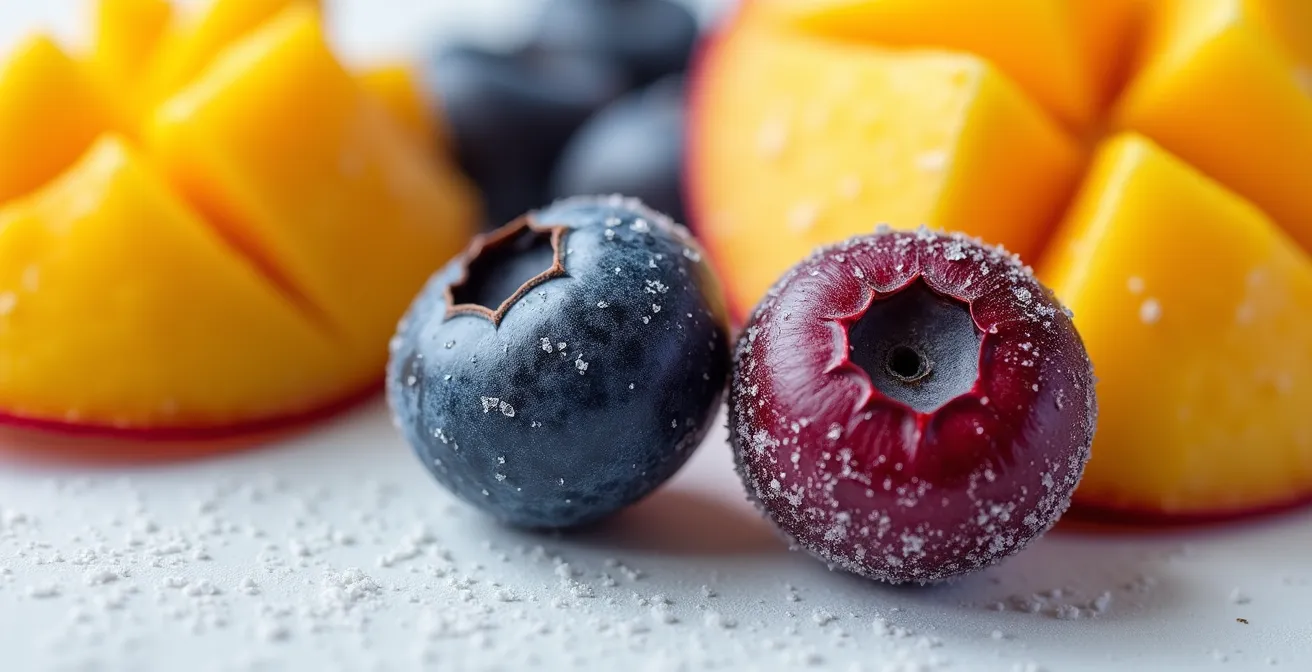
The nutritional superiority extends to fiber as well. A serving of local frozen berries contains significantly more dietary fiber than many popular tropical fruits, further aiding in blood sugar control and promoting digestive health. For a healthy winter diet, consider these local options:
- In Canada: Choose frozen wild blueberries (bleuets), Saskatoon berries, and partridgeberries.
- In Ireland: Stock up on frozen bilberries (fraocháns), blackberries, and sea buckthorn berries.
- Add them directly to oatmeal, yogurt, or smoothies without thawing to best preserve their delicate nutrients.
By choosing these frozen local gems, you get a more potent dose of protective nutrients and support your body’s metabolic resilience, all while enjoying the true taste of the region.
Venison vs. Beef: Why Is Wild Game a Healthier Red Meat Option?
When considering red meat, the conversation often defaults to beef. However, for those in northern climates, wild game like venison (deer meat) represents a nutritionally superior and more sustainable choice. As an animal that forages on a natural diet of grasses, leaves, and herbs, its meat develops a far healthier fatty acid profile than that of conventionally raised, grain-fed cattle. This is a prime example of “terroir nutrition,” where the environment directly shapes the food’s health benefits.
The most significant difference lies in the fat composition. A recent nutritional analysis reveals that venison contains 5x higher omega-3 content than grain-fed beef, with a much more favourable omega-6 to omega-3 ratio. This is critical, as Western diets are typically overloaded with inflammatory omega-6s. Choosing venison helps to rebalance this ratio, supporting cardiovascular health and reducing systemic inflammation. Venison is also exceptionally lean and packed with essential minerals like iron, zinc, and vitamin B12.
Case Study: The Dual Benefit of Local Venison
In addition to being lower in fat and calories than beef, venison also boasts an extensive list of nutrients, providing a good amount of the niacin, zinc and vitamin B12 that you need for the entire day. From a holistic perspective, choosing locally sourced venison from either Canadian wilderness areas or managed estates in Ireland is also a vote for sustainability. It helps control deer populations, preventing damage to forests and crops, and connects consumers directly to a natural, minimally processed food source.
While New Zealand is a major global producer, Ireland is a significant contributor to high-quality venison production in Europe. In Canada, it remains a traditional food source with deep cultural roots. This makes it a protein that is both ancestrally appropriate and readily available.
By replacing conventional beef with venison in stews, roasts, or burgers, you are choosing a protein that is cleaner, leaner, and better aligned with the nutritional needs of an active, healthy body.
The Winter Pantry: What 5 Staples Should You Stock for Nordic Meals?
A resilient winter diet is built on a well-stocked pantry. This isn’t about hoarding canned goods; it’s about curating a collection of shelf-stable, nutrient-dense ingredients that form the backbone of flavourful and nourishing meals. The ideal “cold-climate pantry” reflects the agricultural heritage of its region. Here are five essential staples for a Canadian and an Irish winter kitchen, each chosen for its unique nutritional contribution and local significance.
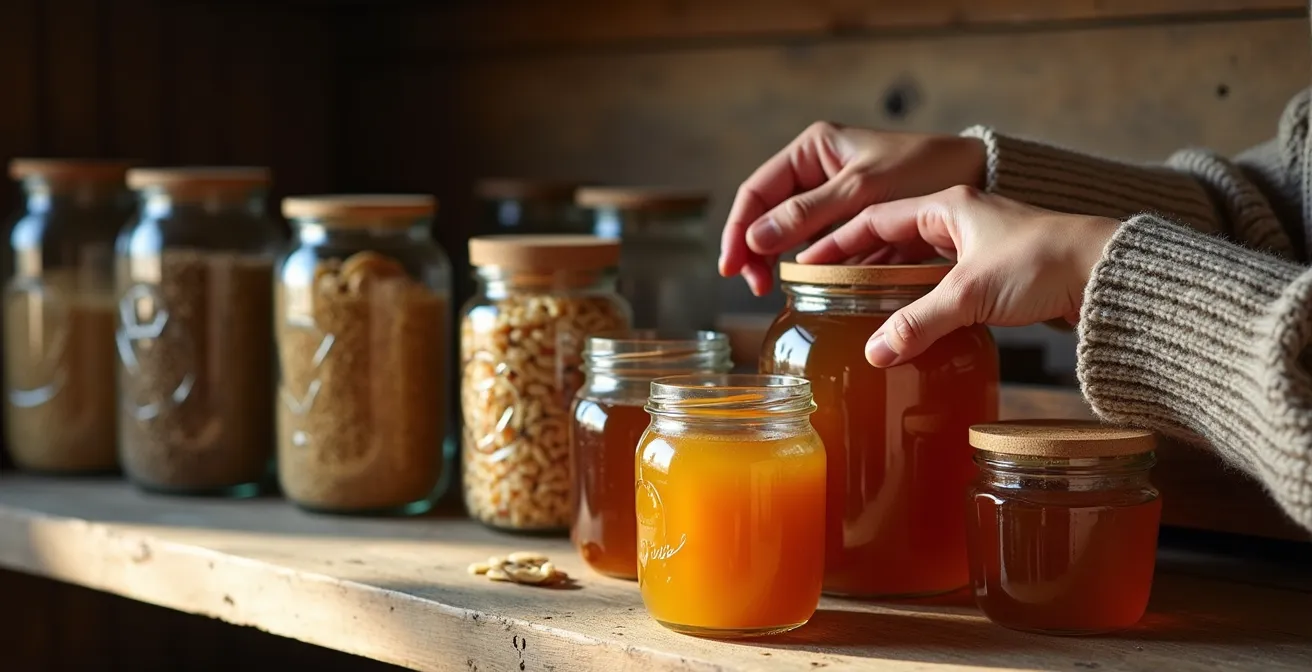
These items provide a foundation of complex carbohydrates, healthy fats, plant-based proteins, and unique micronutrients, enabling you to create a wide variety of meals without relying on the fresh produce aisle.
For a Canadian Pantry:
- Maple Syrup: A natural sweetener rich in manganese and zinc, perfect for glazing root vegetables or adding to oatmeal.
- Wild Rice: A native grass, not a true rice, offering a nutty flavour and a complete protein source.
- Canola Oil: A locally produced oil with a high smoke point, ideal for roasting winter vegetables.
- Split Peas (Yellow or Green): The foundation for hearty, protein-rich soups that warm from the inside out.
- Saskatoon Berry Preserve: A taste of summer, packed with anthocyanins and vitamin C to brighten winter dishes.
For an Irish Pantry:
- Steel-Cut Oats: The classic source of slow-release energy, providing sustained fuel for cold days.
- Rapeseed Oil: The Irish equivalent of canola, rich in monounsaturated fats and locally produced.
- Dulse Seaweed: A traditional coastal ingredient that adds a savoury, umami flavour and a natural source of iodine.
- Apple Butter: A concentrated, fiber-rich preserve made from the autumn apple harvest.
- Local Honey: Offers natural antimicrobial properties and supports local beekeepers and biodiversity.
With these items on hand, you are always prepared to create a meal that is both comforting and deeply nutritious, honouring the food traditions of your home.
Why Does Slow-Cooking Stew for 6 Hours Change the Nutritional Profile?
The traditional art of slow-cooking a stew is more than just a method for developing deep flavour; it’s a form of nutritional alchemy. This process is specifically designed to transform tough, inexpensive cuts of meat—like bison shoulder or lamb shank—into a tender, juicy, and highly digestible source of nourishment. The magic lies in the breakdown of a specific protein: collagen.
Collagen is the connective tissue that runs through muscles, and in its raw state, it’s tough and chewy. However, when subjected to low, moist heat over a long period, it undergoes a remarkable transformation. This is not just folk wisdom; it’s a well-understood chemical process. As leading food science research demonstrates, collagen begins converting to gelatin at around 71°C (160°F) and the process accelerates as the temperature approaches 82°C (180°F). A slow cooker or a low oven provides the perfect environment for this gradual conversion.
This resulting gelatin is what gives a good stew its luscious, mouth-coating texture. But its benefits are more than just textural. Gelatin is rich in amino acids like glycine and proline, which are crucial for building and repairing our own connective tissues, supporting joint health, and promoting a healthy gut lining. As The MeatStick explains in their analysis of the process:
While raw collagen is tough, slow cooking converts it into gelatin, which makes meat tender and juicy. When meat is raw, collagen is strong and stringy, giving structure to muscle fibers. This gelatin coats the meat fibers, adding a luscious texture and richer flavor.
– The MeatStick, The Science of Collagen
Slow cooking also gently breaks down the cell walls of root vegetables added to the pot, making their vitamins and minerals more bioavailable and easier for our bodies to absorb. It’s a cooking method that maximizes nutrition, not diminishes it.
Therefore, a long-simmered stew is not “overcooked” food; it is perfectly pre-digested nourishment, ideally suited for the body’s needs in winter.
Beeswax Wraps vs. Silicone: Which Actually Keeps Cheese Fresh Longer?
Once you’ve invested in high-quality, nutrient-dense foods like artisanal cheese, proper storage is essential to preserve their flavour, texture, and longevity. The two most common reusable options are silicone bags and beeswax wraps, but they function in fundamentally different ways. While silicone creates an airtight seal, this can be detrimental to fine cheese. Beeswax wraps, a traditional material given a modern revival, offer a superior solution because they allow the cheese to breathe.
Cheese is a living food that continues to ripen and release gases, primarily ammonia. In an airtight silicone bag, this moisture and gas gets trapped, leading to a “sweaty” surface and the development of unpleasant, ammoniated flavours. Beeswax wraps, typically made from cotton infused with beeswax, pine resin, and jojoba oil, are naturally breathable. They protect the cheese from drying out while allowing excess moisture and gases to escape, mimicking the environment of a natural cheese cave.
Case Study: Preserving Local Cheeses
Comparative tests using regional artisanal cheeses, such as an aged Canadian cheddar from PEI and a creamy Irish Cashel Blue, consistently show the superiority of beeswax wraps. The breathability of the wraps prevents the build-up of off-flavours in both the hard and soft-ripened cheeses. Furthermore, the natural antibacterial properties of beeswax, sourced from local apiaries, provide an additional layer of protection against mould, extending the life and preserving the true flavour of the cheese far more effectively than an airtight silicone container.
Supporting local producers for these wraps also contributes to regional food systems and the health of bee populations. To get the most out of this traditional storage method, follow a few key steps.
Your Action Plan: Choosing and Using Beeswax Wraps
- Source wraps from local producers, such as those in Canada’s Maritime provinces or from beekeepers in Ireland’s County Cork, to ensure high-quality regional beeswax.
- Choose wraps made with certified organic cotton and pine resin, as this combination offers the best balance of structure and breathability for cheese.
- Confront the wrap to your needs; use a large wrap for a big block of cheddar and a smaller one for a round of camembert to ensure a snug fit.
- Assess the wrap’s effectiveness by checking the cheese after a few days; it should feel cool and firm, not slick or wet.
- Create a plan to refresh your wraps every 6-12 months by re-waxing them with a block of local beeswax to maintain their optimal performance and hygiene.
For cheese lovers, switching to beeswax wraps is a simple change that yields a significant improvement in quality, reducing food waste and enhancing your culinary experience.
Key Takeaways
- Winter nutrition is about nutrient density, not deprivation; focus on local, ancestrally appropriate foods.
- Traditional preparation (fermenting, slow-cooking) and storage (freezing, wrapping) methods unlock and preserve nutritional value.
- Choosing local northern foods like mackerel, venison, and wild berries provides superior levels of key nutrients like Vitamin D and Omega-3s compared to many imports.
How to Adapt Traditional Irish Stew Using Local Canadian Ingredients?
The principles of a deeply nourishing winter diet culminate beautifully in the creation of a hearty stew. A traditional Irish stew, based on lamb, potatoes, and root vegetables, is a perfect template. However, the true wisdom of the recipe lies not in its exact ingredients, but in its philosophy: using a tough, collagen-rich cut of meat, slow-cooking it with seasonal root vegetables, and using a flavourful liquid to bring it all together. This philosophy makes it perfectly adaptable to a Canadian context, creating a dish that is both new and ancient.
The key is “role-swap” substitution. Instead of being rigid about ingredients, identify the function each one performs and find a local equivalent. This honours the spirit of the original dish while celebrating the terroir of a new place.
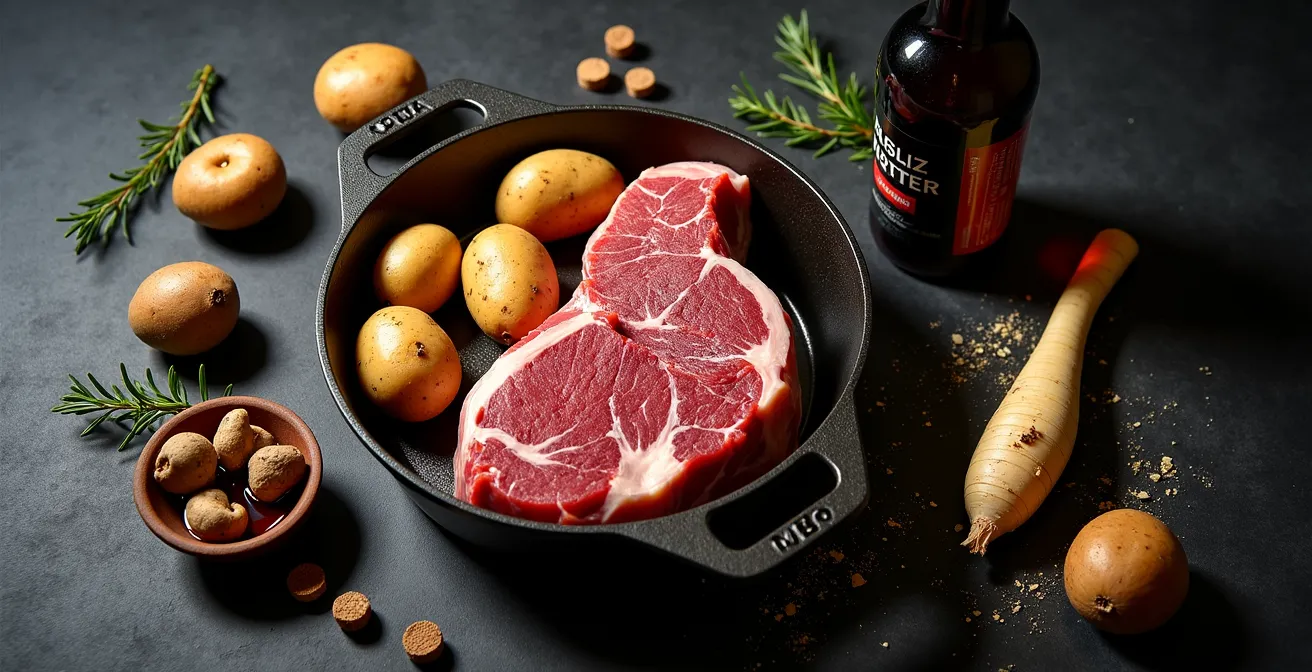
Here is a guide to adapting a classic Irish stew using distinctly Canadian ingredients, following the role-swap principle:
- The Meat (Collagen Source): Replace lamb shoulder with Canadian bison shoulder or elk shank. These cuts are similarly tough, lean, and rich in the collagen needed to create a gelatinous, flavourful broth during slow cooking.
- The Liquid (Flavour Base): Substitute Guinness with a dark, malty craft porter from a Quebec or BC brewery. This provides the same rich, slightly bitter notes that balance the sweetness of the root vegetables.
- The Roots (Carbohydrate & Earthiness): Use a base of PEI potatoes, but enhance it with the sweetness of Ontario sweet potatoes and the peppery notes of prairie-grown rutabaga or parsnips.
- The Wild Element (Umami Depth): Add a handful of dried, locally foraged mushrooms like morels or chanterelles, or a few crushed juniper berries to evoke a “boreal forest” aroma.
- The Finish (Balancing Act): Instead of a barley thickener, finish the stew with a subtle drizzle of maple syrup. This uniquely Canadian touch balances the rich meat flavours and the bitterness of the dark beer.
By following these steps, you create a Canadian-Irish stew that is a testament to the idea that true nourishment comes from adapting ancestral wisdom to the bounty of your local land.